

Qatar Visa on Arrival: Proof of Funds Guide for Indian Travelers (2026)
Posted on:
September 17, 2026
You've sorted your flight to Doha, but step off the plane at Hamad International Airport only to realize you're unprepared for the passport control desk's financial screening, and it's not a formality you can talk your way past. Qatar's immigration officers do check that travelers on a visa on arrival can demonstrate sufficient funds, and if you can't, the outcome isn't a warning or a second chance; it's denied entry, sent back on the next available flight, at your own cost, after hours stuck at the airport. It's a stark reminder that "I have money for my trip" and "I can prove it at the desk in the exact format they require" are two very different things.
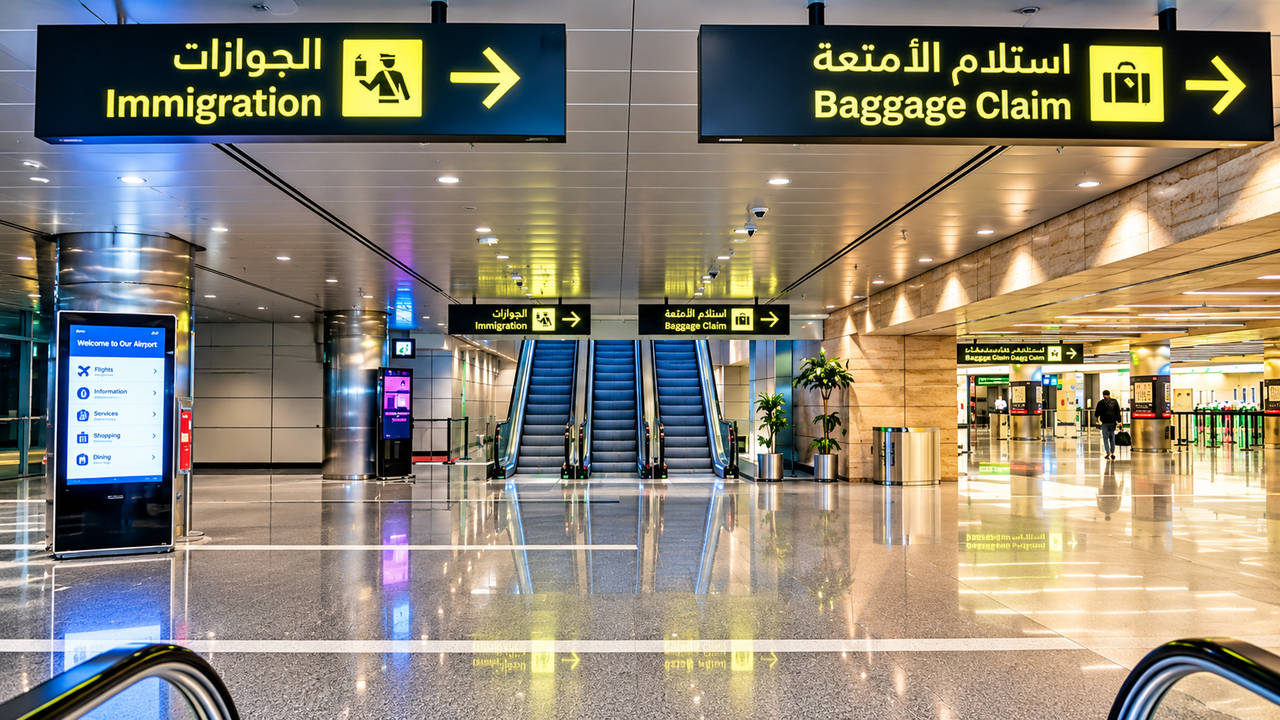
Mastering the Qatar visa on arrival proof of funds requirement ;cash vs. card, how much, and in whose name ; is the single most overlooked step in preparing for a Doha arrival, and it's exactly what this guide walks through.
The quick answer: Qatar's visa on arrival process strictly prefers international credit or debit cards over physical cash for financial validation. While the Indian tourist Visa on Arrival is technically free, carrying the right card, in the right name, with the right balance, is what actually prevents delays or refusal at the desk.
The Cash vs. Card Rule for Qatar's Visa on Arrival
The Card Preference
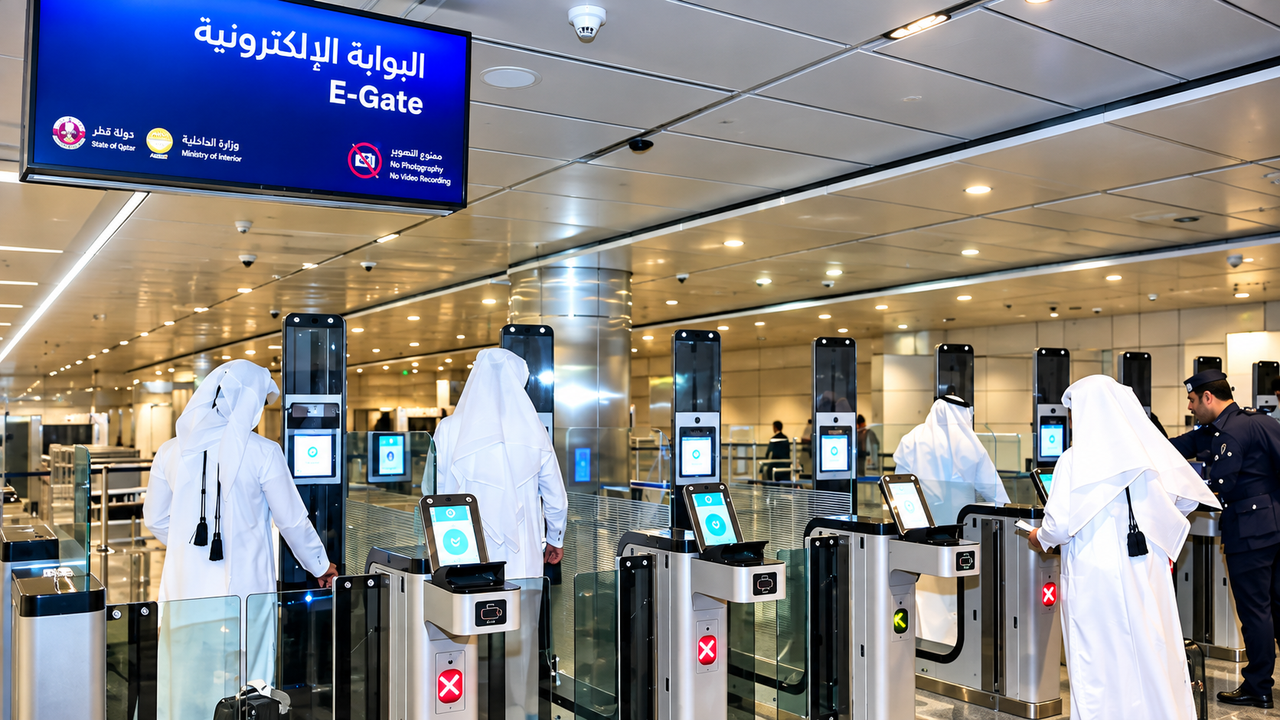
Qatari immigration relies heavily on electronic cards as the default form of financial verification for visa on arrival travelers. This isn't just a preference; it's built into how the passport control counters operate. Hamad International Airport's own site confirms that passport control counters can only accept credit cards and debit cards directly at the desk. If your plan was to simply show cash and move on, that's not how the counter is set up to work.
The Card Ownership Mandate
The card you present should be your own. This standard shows up consistently across airline-published entry requirements for the India–Doha route; Air India Express's own travel documents page, for instance, lists a valid debit or credit card in the traveller's own name as a required document for Qatar entry.
Some guidance floating around suggests a family head's card can cover an entire travelling family unit. This isn't confirmed on any official airline or government source, so treat it as unverified rather than a safe assumption. If you're travelling as a family and planning to rely on one card, the safer move is to travel with each adult's own card where possible, or contact your airline directly before you fly to confirm what will be accepted at the desk.
The HIA Cash Bank Counter Penalty
Immigration desks do not take cash directly; full stop. If you want to pay any related fee in cash, you'll need to queue at a separate, designated bank counter before you even reach passport control. Hamad Airport's own site confirms cash payments must go through this bank counter, and Marhaba Qatar, the country's official visitor information service, confirms the processing fee at QAR 25 (~USD 7).
The practical upshot: even if you're carrying enough cash to cover everything, plan for the extra step (and the extra few minutes) of a bank-counter detour before you join the immigration queue; or better yet, just have a card ready and skip that step entirely.
Fact-Checking the Qatar Visa on Arrival Proof of Funds: The Truth About the QAR 5,000 Requirement
The Grey Area: No Single Official Figure
Here's where a lot of travel blogs get more confident than the evidence actually supports. Some third-party travel sites cite a QAR 5,000 (~USD 1,400) minimum balance requirement for Indian, Pakistani, Thai, and Iranian passport holders. Others cite an older figure closer to USD 1,000. Neither figure appears stated explicitly on Qatar's official Ministry of Interior portal as a fixed, published number.
What is clear is that immigration officers do check for adequate financial proof, and travelers who can't show it are turned away; a requirement consistently reported across visa guides, travel forums, and past travelers' accounts, even without one official published figure to point to. What's not clear is a single, universally confirmed threshold. Given that ambiguity, the safest approach is to comfortably exceed whatever figure you've seen quoted rather than cut it close, and to have more than one form of proof ready.
The 3-Month Bank Statement Safe Bet
If you're relying on a debit card rather than a credit card, the safer tactical move is to carry a printed or digital bank statement covering the last three months, showing steady liquidity rather than a single deposit right before travel. This gives an immigration officer a clearer, harder-to-dispute picture of your financial standing than a card alone, and it's a low-effort thing to print before you leave home.
Accepted Currencies for Cash Audits
If an officer asks for a supplementary wallet check on top of your card, major global currencies are generally accepted for this kind of visual inspection: USD, EUR, GBP, alongside regional currencies like QAR, SAR, and AED. This isn't usually the primary check (your card does most of the work), but it's worth having a reasonable amount of one of these on hand as backup rather than relying solely on Indian Rupees, which aren't typically what officers are looking to see at this desk.
What to Do If Your Documents Are Questioned at the Desk
Most Indian travelers who arrive with the right card, the right balance, and a valid Discover Qatar booking pass through without incident. But if something doesn't check out ; a card that won't process, a booking that doesn't match your dates- knowing what's actually within your control matters more than any airport myth.
Carry a Backup, Not Just a Backup Plan
A single card is a single point of failure. If your primary card is blocked by your bank's fraud detection ; a common issue when a card is used abroad for the first time , you want a second, independent card ready, ideally from a different bank, rather than relying on one card working under pressure. Before you fly, call your bank and tell them you're travelling to Qatar; this alone prevents a large share of "declined at the desk" situations.
Your Printed Bank Statement Is Your Real Fallback
If a card fails entirely, a printed three-month bank statement- the same one recommended earlier in this guide ;becomes your strongest backup evidence of financial standing. Paper doesn't lose signal, doesn't get blocked by a fraud algorithm, and doesn't depend on Wi-Fi.
If You're Told You Don't Meet the Requirement
Hamad International Airport's own guidance is direct on this point: if you're denied entry for any reason, Qatar's Ministry of Interior and your airline are the parties responsible for providing guidance and assistance; not a workaround at the counter. There is no verified "emergency override" available at the desk. Practically, this means:
Stay calm and cooperative; disputing with the immigration officer directly rarely changes an outcome already flagged by the system.
Ask for your airline's ground staff, who are typically notified when a passenger is held and can assist with rebooking or next steps.
If you believe the refusal is a mistake rather than a genuine shortfall, this is exactly the kind of situation the Indian Embassy in Doha can be looped in on, once you're able to contact them.
The Corrected Core Entry Checklist (Busting the Myths)

A lot of what circulates online about Qatar's visa on arrival requirements is outdated or simply wrong. Here's the corrected version.
Passport Validity: The 3-Month Rule
You'll see "6 months" quoted constantly across travel blogs and even some visa-consultant sites. That's not correct for the standard tourist Visa on Arrival. Qatar's official tourism authority confirms passports need to be valid for a minimum of 3 months from your date of arrival. The 6-month figure tends to apply to business or work visas, or gets added as an extra safety margin by cautious sources; not because it's actually required for tourism. That said, since airline check-in staff sometimes apply the stricter 6-month rule out of caution regardless, having that buffer avoids friction at boarding even when it isn't strictly mandated.
The Health Insurance Caveat
Another common misconception: that health insurance is mandatory for every Qatar visit. It isn't, for the standard route. Per Qatar's Ministry of Public Health, Visa on Arrival travelers are exempt from mandatory Qatari health insurance for their first 30 days. It only becomes a non-negotiable requirement once a stay extends past that 30-day mark. If your trip is a standard one- or two-week visit, you don't need to buy anything here; though having basic travel health coverage anyway is generally a good idea, requirement or not.
The Accommodation Mandate (Discover Qatar)
None of the financial proof above matters if your accommodation documentation is invalid. Indian passport holders cannot present a standard Booking.com, Agoda, or Airbnb voucher at the desk; only a confirmed booking made through the official Discover Qatar platform satisfies this requirement. If you haven't sorted this yet, our full Doha Booking Guide for Indian Citizens walks through exactly how to book correctly, including what to do if you've already booked elsewhere by mistake.
No Doha results found for this spot.
Qatar Customs: Maximum Limits for Carrying Money
The QAR 50,000 Declaration Ceiling
So far, this guide has focused on minimums, proving you have enough for Qatar's visa on arrival. There's also a maximum to be aware of. If you're carrying cash, gold, or traveler's checks valued at QAR 50,000 (~USD 13,700) or more, this must be legally declared at customs. This isn't about discouraging you from bringing money; it's a standard anti-money-laundering control found at most international borders, Qatar included.
Legal Consequences of Non-Declaration
The consequences here are more serious than a slap on the wrist. Per Qatar's General Authority of Customs, failing to declare, or providing false information, can result in imprisonment for up to three years, fines ranging from QAR 100,000 to QAR 500,000 (or twice the value of the undeclared funds, whichever is greater), and confiscation of the funds themselves. None of that is worth risking over a form you could have filled out in advance. If you're travelling with amounts anywhere near the QAR 50,000 threshold, declare it proactively through the Qatar General Authority of Customs online declaration system rather than hoping it goes unnoticed at the desk.
Got the financial side sorted? The other piece Indian travelers get wrong is accommodation and activities. A standard Booking.com or Airbnb voucher won't clear passport control; only a confirmed hotel booking through the official Discover Qatar platform will. If you haven't sorted your stay yet, our Doha Booking Guide for Indian Citizens walks through exactly how to book it correctly. Once that's locked in, check out our Doha city tours and experiences to plan what you'll actually do once you land.
Frequently Asked Questions
Latest Posts