
Katara Cultural Village
Discover the Katara Cultural Village
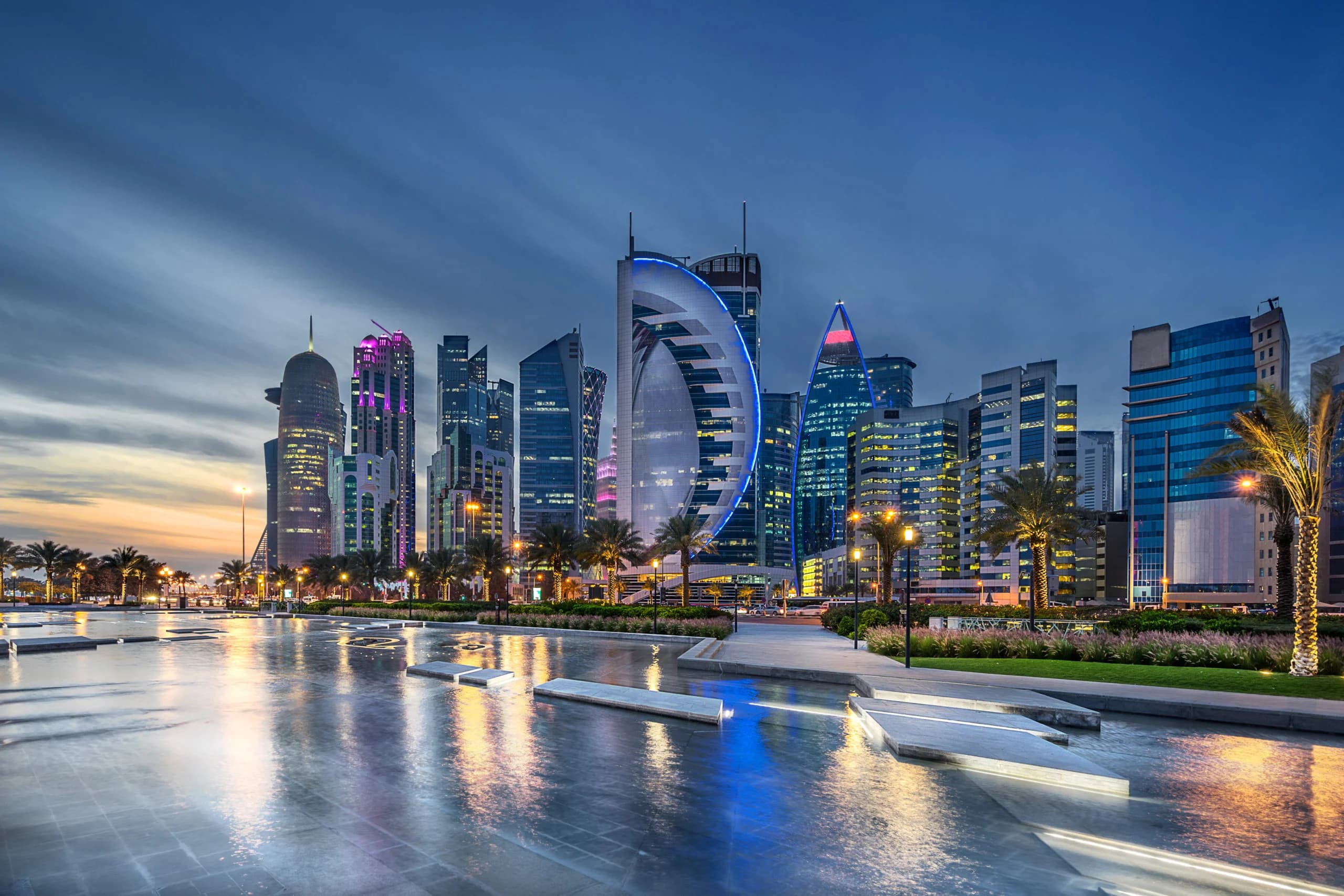
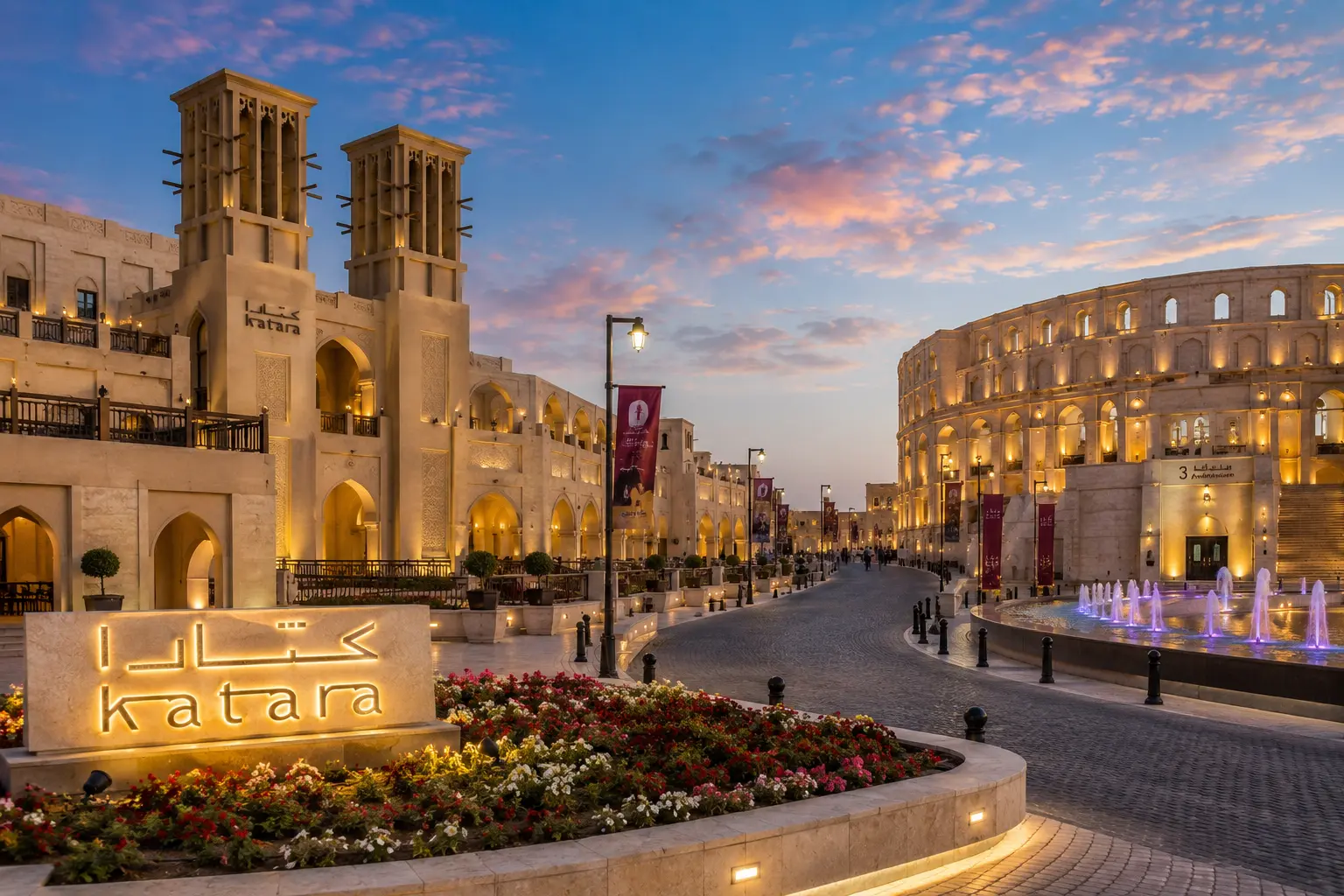
Between the towers of West Bay and the island of The Pearl, the coast opens into a village of stone lanes, courtyards and wind towers, with the Gulf running along one side of it.
This is Katara, Qatar's cultural quarter, and it holds more in one place than anywhere else in Doha. Two of the country's most beautiful mosques, one wrapped in blue and gold tilework and the other in gold mosaic. An open air amphitheatre facing the sea. Galleries, an opera house, a planetarium, a 1.5 kilometre beach and enough restaurants to keep you coming back for a week.
The village was built from 2010 in traditional Gulf style, and it was built to be used rather than looked at. Families picnic on the hills above it, the Qatar Philharmonic rehearses in the opera house, artists work in the studios, and the beach fills every winter weekend.
There is no gate and no ticket. Come at four in the afternoon and stay until late.
Why Katara Cultural Village Is Famous
Katara was conceived as the largest cultural project in Qatar, and it succeeded at something most such projects fail at. It became a place people actually go.
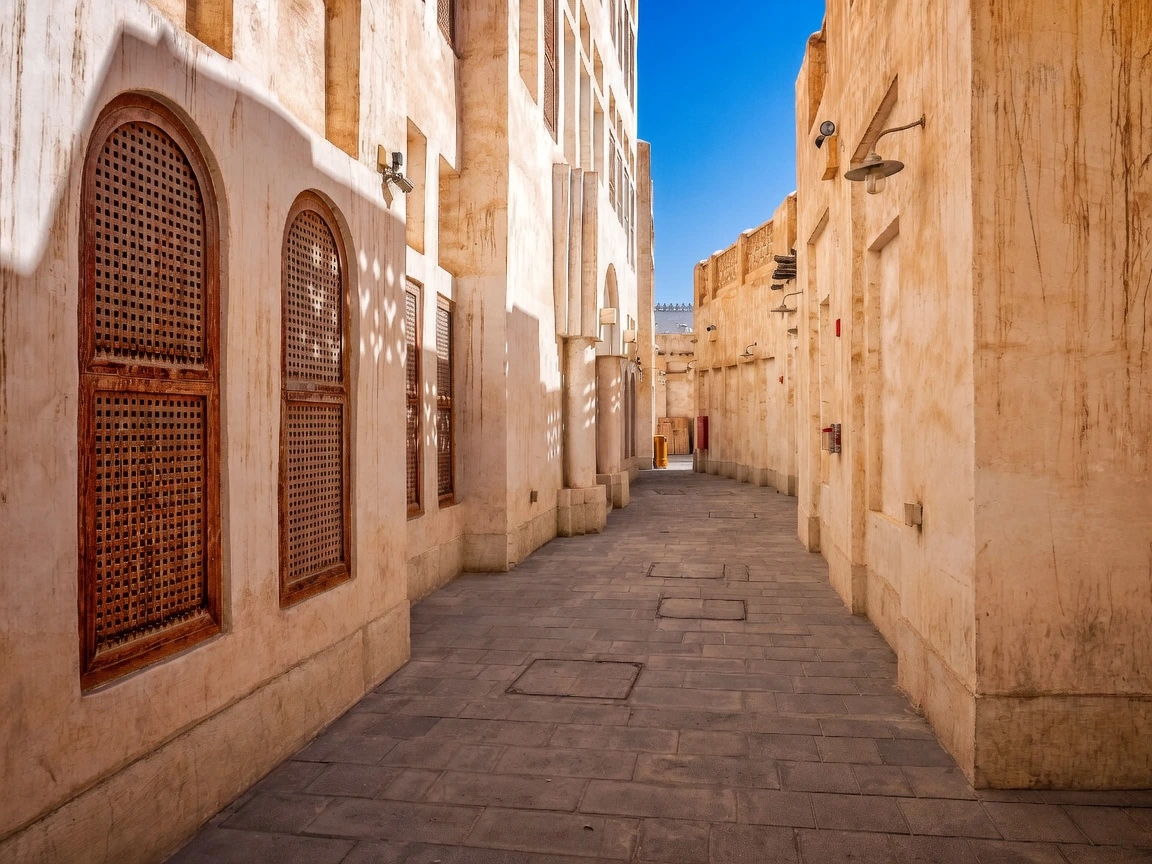
Part of that is the architecture. Rather than commissioning a single signature building, Qatar built an entire village in traditional Gulf idiom, with narrow shaded lanes, courtyard buildings, wind towers and pigeon towers, all in stone and mud coloured plaster. The result photographs like a heritage quarter and functions like a modern arts district.
Part of it is the programming. Katara hosts the Qatar Philharmonic Orchestra, the Ajyal Film Festival each November, the Traditional Dhow Festival, the International Arabian Horse Festival and a rolling calendar of exhibitions and concerts. Very little of it is aimed only at tourists.
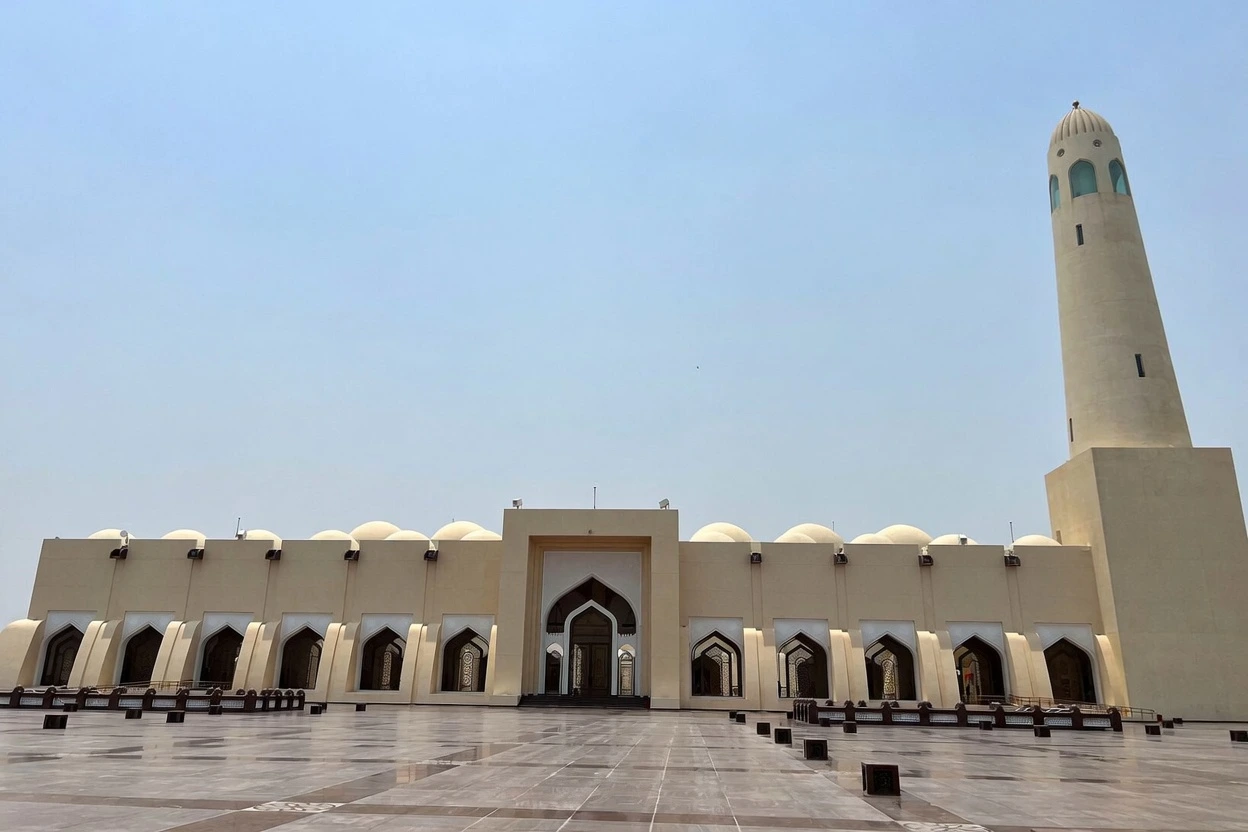
And part of it is the two mosques. The blue tiled Katara Masjid, designed by Zeynep Fadıllıoğlu, one of the first women to design a mosque anywhere in the Islamic world, and the Golden Masjid beside it. Between them they account for a large share of the photographs taken in Doha every year.
Known for: Two landmark mosques, an open air amphitheatre and a year round cultural calendar
Design: A purpose built village in traditional Gulf style, with lanes, courtyards and wind towers
Setting: Coastline between West Bay and The Pearl, with a 1.5 kilometre beach
Opened: 2010, and still expanding
Status: Qatar's principal arts and events district, free to enter and open around the clock
The Architecture of the Village
Walk the alleys and the logic becomes clear. They are narrow because narrow lanes hold shade. They bend because straight streets funnel wind and dust. The buildings turn inward around courtyards for the same reason Gulf houses always did.
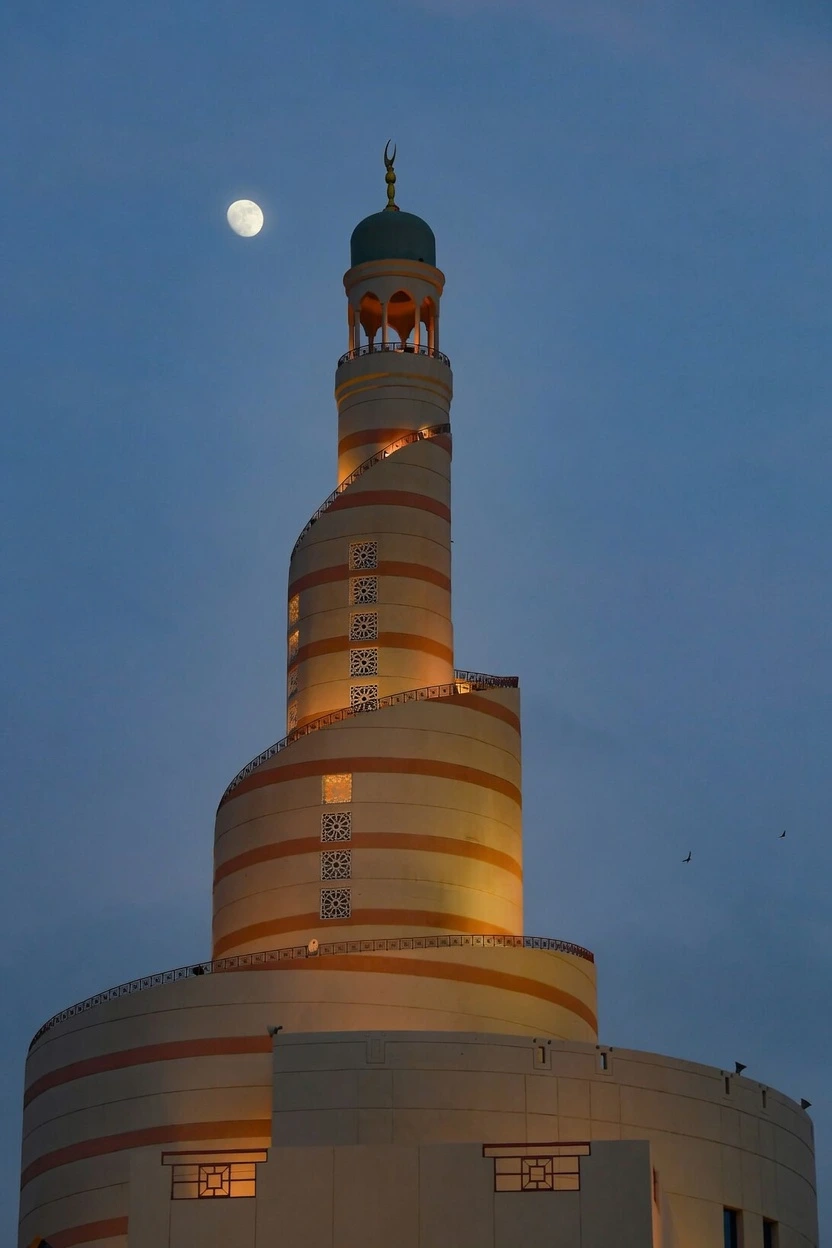
Wind towers rise above the rooftops, the old cooling system that pulled breeze down into rooms before electricity existed. Here they are largely decorative, but they set the skyline of the village and give it a profile that reads as Qatari from a distance.
The pigeon towers are the detail people remember. Tall, tapered, honeycombed with hundreds of nesting holes, they stand beside the mosque and are fully occupied. Pigeons were kept for their droppings, used as fertiliser in a country with thin soil, and the birds still wheel around the towers at dusk.
Materials do the rest. Rough stone, lime plaster, timber beams and inlaid doors, chosen to weather rather than to shine. Fifteen years of sun and salt have worked on them, and the village has settled into its own skin.
What to See at Katara
Katara is spread out and easy to wander without a plan, but a handful of things deserve to be sought out.
The Amphitheatre
An open air theatre of roughly 3,275 square metres, built in classical Greek form but detailed with Islamic arches along its upper gallery. It seats several thousand and looks straight out to the Gulf. Concerts, festivals and ceremonies run here through the cooler months, and when nothing is scheduled you can usually walk in and sit on the stone tiers for free.
Katara Masjid, the Blue Mosque
The most photographed building in the village. Its exterior is wrapped in Persian and Turkish tilework in deep blue, purple and gold, drawing on the palette of Istanbul's Dolmabahçe Palace, and it was designed by Zeynep Fadıllıoğlu. Come in the late afternoon when the low sun lifts the colour out of the tiles.
The Golden Masjid
A short walk away, finished in gold mosaic tiles that catch the light through the whole day and blaze at sunset. Smaller and simpler than its neighbour, and the pair of them together make the walk between worth taking slowly.
Galleries, Studios and the Opera House
Katara Art Center, the Qatari Visual Art Center and a run of independent galleries occupy buildings across the village, most free to enter. The opera house is home to the Qatar Philharmonic Orchestra and hosts recitals, ballet and touring productions through the season.
Al Thuraya Planetarium
A domed planetarium running shows on astronomy and on the traditional Arab star knowledge that guided navigation and pearling in the Gulf. Sessions are ticketed and scheduled, so check the programme before you go.
The Beach and the Hills
Katara Beach runs for about 1.5 kilometres along the village shoreline and is the busiest stretch of sand in central Doha through winter. Entry is ticketed, with a small charge for chairs and umbrellas, and the operator runs one of the widest ranges of water sports in the country, from parasailing and water skiing to kayaks, banana boats and sailing dinghies. A modest dress code applies and is enforced, so read the rules before you plan a swim.
Behind the village, the Katara Hills rise to north and south, landscaped with walking paths, gardens and water features. They are the reason photographers gather here at either end of the day, since from the top you get the amphitheatre, both mosques and the sea in a single frame. Locals use them for jogging and picnics, and the climb takes only a few minutes.
Eat, Drink and Take Something Home
Katara has become one of Doha's densest dining districts, with well over thirty outlets across the village and the esplanade. The range runs from Qatari and Levantine to Italian, Iranian, Japanese and Turkish, alongside a scattering of dessert houses and specialist coffee.
Karak and chapati from the casual walk up counters remains the local order, best taken to the seafront wall in the evening. Along the beach front the seafood restaurants have the better tables. Book ahead on Thursday and Friday nights, when the whole village fills.
Katara Plaza sits at the northern end with international luxury retail, and craft shops and galleries throughout the village sell work by Qatari and regional artists, which makes for better souvenirs than anything you will find in a mall.
Visitor Essentials
Opening hours: The village is open 24 hours and has no entrance gate. Individual venues, galleries, shops and restaurants keep their own hours, typically from mid morning to late evening.
Admission: Free to enter and to walk the village, the hills and the esplanade. The beach, the planetarium, water sports and ticketed performances carry their own charges, so check current pricing for each.
Beach hours: Afternoon until late evening, with the exact window shifting by season. Confirm before travelling out for a swim.
Time needed: Two to three hours for a walk through the main sights. A full evening if you add dinner, and half a day with the beach.
Facilities: Prayer rooms, restrooms across the village, free parking including a large underground car park, cash machines, pharmacies, family facilities and shaded seating throughout.
Access: Mostly step free with paved lanes and ramps, though some alleys are cobbled and the hills involve a gentle climb.
Dress: Modest dress covering shoulders and knees, in line with signage at the village entrances and enforced at the mosques and the beach.
Photography: Freely permitted throughout the village. At the mosques, photograph the exteriors and be discreet around worshippers.
Mosque access: Both mosques are working places of worship. Non Muslim visitors should treat them as photographs from outside rather than assume entry, and avoid prayer times entirely.
Getting Here
Metro: Red Line to Legtaifiya station, then a short taxi ride or roughly a 20 minute walk. Katara has no station of its own, so factor in the last leg.
Taxi: The simplest option. Around 15 minutes from West Bay, 20 to 25 from Souq Waqif and roughly 30 from Hamad International Airport.
Bus: Mowasalat services run along the Al Corniche and Lusail corridor and stop within walking distance of the village.
Car: Free parking on site, including a large underground car park. It fills on Thursday and Friday evenings and during festivals.
On foot: Walkable from The Pearl in around 25 minutes along the coast road, though the route is not scenic.
Make an Evening of It
Katara works best from mid afternoon onwards, and in summer it barely works at all before sunset.
Arrive around 4pm and start on the hills while the light is still high, since the view from the top orients you to everything below. Come down through the lanes to the two mosques as the sun drops and the tilework does its best work. That is the hour worth planning around.
From there the amphitheatre is a two minute walk, and the esplanade beyond it puts you among the restaurants just as the village fills. Eat late, then walk the seafront with the lights of The Pearl on one side and West Bay on the other.
If you are travelling with children, invert it. Beach and water sports in the afternoon, planetarium show early evening, dinner after. The village stays busy and family filled well past ten.
Stay Nearby
The Pearl sits closest, a short drive north, with waterfront apartments and hotels and a dining scene of its own that pairs naturally with Katara.
West Bay is 15 minutes south and puts the skyline, the Corniche and the business district within reach while keeping Katara an easy evening trip. For a first visit weighted towards culture and beaches rather than heritage and souqs, either beats staying downtown.
Frequently Asked Questions
Explore Tours
No tours found for Museum of Islamic Art right now.