
National Museum of Qatar
Discover the National Museum of Qatar
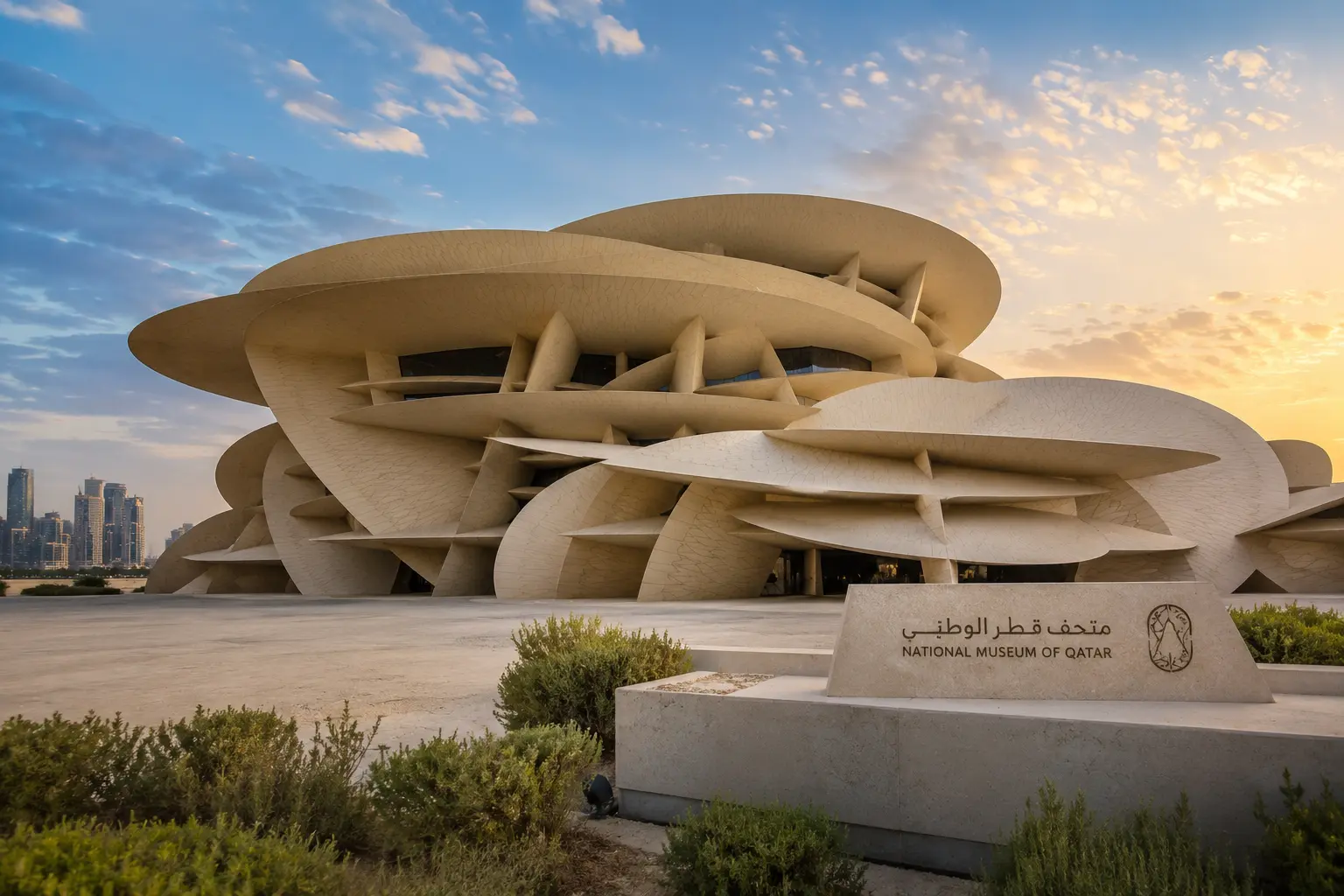
At the southern end of the Doha Corniche, hundreds of vast concrete discs tilt into one another and sprawl low across the ground, throwing deep shade over the walkways beneath them. There is nothing else like it in the Gulf.
Jean Nouvel modelled the building on the desert rose, a crystal that forms underground when gypsum and sand meet water in arid soil. Qatar has them, small enough to hold in one hand. He built one large enough to walk through.
Inside, eleven galleries tell the story of the country from its geology to the present day, using film wrapped across curved walls, recorded voices and objects placed sparingly. At the centre sits the restored palace of Sheikh Abdullah bin Jassim Al Thani, home and seat of government for a quarter of a century, which the museum was designed to wrap around rather than replace.
Outside there is a park, a lagoon full of sculptural fountains and an Alain Ducasse restaurant on the top floor. The metro stops at the door.
Give it a morning. Most people come for the building and leave talking about the storytelling.
Why the National Museum of Qatar Is Famous
The museum opened in March 2019, replacing a smaller institution that had occupied the palace since 1975. What went up in its place became, almost immediately, one of the most talked about buildings in world architecture.
The reason is the form. Jean Nouvel had already won the Pritzker Prize when he took the commission, and the desert rose design pushed concrete engineering into territory nobody had attempted at this scale. Hundreds of curved discs of differing sizes intersect at angles, each cast to its own specification, with no repeating module anywhere in the structure.
Its second claim is what happens inside. Rather than filling cases with artefacts, the museum built its galleries around immersive film projected onto curved surfaces, commissioned scores, oral history recordings and a small number of carefully chosen objects. It is regularly cited as one of the strongest examples of narrative museum design anywhere.
The third is the collection itself, which runs from meteorites and marine fossils to the Baroda Pearl Carpet, a 19th century piece embroidered across its entire surface with Basra pearls and among the most valuable objects in the country.
Known for: Qatar's story told through immersive film led galleries, and the Baroda Pearl Carpet
Architect: Jean Nouvel, Pritzker Prize winner, inspired by the desert rose crystal
Setting: Built around the restored palace of Sheikh Abdullah bin Jassim Al Thani
Opened: March 2019, replacing the museum that opened on the site in 1975
Status: Qatar's national museum and one of the most recognised buildings in the Gulf
A Building Grown from the Ground
The desert rose was a difficult idea to build. Every disc curves differently, meets its neighbours at a different angle and carries load in a different direction, which meant almost nothing on site could be standardised.
The effect from outside changes as you move. From the Corniche the museum reads as a low sandstone coloured sprawl. From the entrance the discs tower over you and cut the sky into slices. From the park behind, they lift clear of the ground and throw shade deep enough to sit in.
Inside there is barely a right angle in the place. Walls lean, ceilings tilt, floors rise gently underfoot, and the projections wrap around all of it so that film runs across surfaces rather than sitting on screens. It is disorienting for the first few minutes and then it starts to work on you.
The palace at the centre is the counterpoint. Low, plain, built of coral stone and mud plaster, restored rather than reconstructed. Walking out of the galleries into its courtyard is the single best moment in the building.
Inside the Galleries
Eleven galleries run in a fixed sequence across three chapters, following a route of roughly a kilometre and a half. The order matters, so resist the urge to skip ahead.
Beginnings
The peninsula before people. Meteorites, fossils, marine life and the geological forces that shaped Qatar, with film filling entire curved walls to make the emptiness feel enormous rather than empty.
Life in Qatar
Bedouin life in the desert and the coastal settlements the sea fed. Tents, tools, textiles and jewellery are set against recorded voices and archive footage that give the objects their owners back.
The Pearling Galleries
The industry that built Qatar before oil, told through diving equipment, merchant records and the punishing economics of the trade. This is where the Baroda Pearl Carpet sits, embroidered across its entire surface with Basra pearls and among the most valuable objects in the country.
Building the Nation
Oil, independence, rapid construction and the Qatar of the present day. The pace of the storytelling shifts to match the pace of the history, and the closing galleries are the most contemporary in tone.
The Palace and the Library
The restored home of Sheikh Abdullah bin Jassim Al Thani sits at the heart of the building, low ceilinged and quiet, with its courtyard and majlis intact. The museum library on the third floor is the other room worth finding.
The Park and the Lagoon
The grounds cover a large stretch of reclaimed land between the museum and the water, planted with native desert species that need almost no irrigation.
The lagoon is the reason to walk out here. Jean-Michel Othoniel filled it with sculptural fountains, white forms that push water into the air in slow sequences and look best in the hour before sunset with the discs of the museum behind them.
There are shaded walkways, a food area, a children's play zone and enough open ground that families stay far longer than they planned. The park is free and worth a visit even without a museum ticket.
Eat, Drink and Take Something Home
Jiwan sits on the top floor, an Alain Ducasse restaurant serving modern Qatari cuisine with the bay on one side and the museum roofline on the other. Reservations are essential and opening arrangements can change, so confirm before planning a meal around it.
Desert Rose Cafe handles the casual end, with Qatari fusion plates from a Qatari chef. Thalatheen is the plant based option, a vegan cafe overlooking the park.
There are two gift shops, one aimed squarely at children, and both stock pieces designed around the collection rather than generic souvenirs.
Visitor Essentials
Opening hours: Saturday, Sunday, Monday and Wednesday 9am to 7pm. Thursday 9am to 9pm. Friday 1:30pm to 7pm. Closed Tuesdays.
Last entry: 45 minutes before closing. Staff begin clearing the galleries at that point, so arriving late costs you the last chapter.
Admission: Free for Qatar and GCC residents, One Pass holders and children aged 16 and under. Non resident adults pay a standard fee, with a reduced student rate. Check current pricing on the official Qatar Museums ticketing page.
Booking: Tickets are sold on arrival, but each carries a timed slot, so booking online is the safer option at weekends. General admission normally covers temporary exhibitions too.
Time needed: Two to three hours for the full route. Add an hour for the park and lagoon.
Facilities: Cloakroom, prayer rooms, restrooms throughout the galleries and in the park kiosks, changing tables, library, auditorium, multilingual audio guides, three dining options, two gift shops, free Wi-Fi.
Access: Step free throughout, with lifts, accessible restrooms and wheelchairs available on request.
Dress: Modest dress covering shoulders and knees. Abayas and shaylas are available to borrow at the entrance if needed.
Photography: Allowed for personal use without flash or tripods. Some temporary exhibitions restrict it, and commercial filming needs advance approval.
Getting Here
Metro: Gold Line to National Museum station, which sits directly beside the building. The easiest arrival of any major attraction in Doha.
Taxi: Around 15 minutes from Hamad International Airport and 10 to 15 from West Bay.
Free shuttle: Qatar Museums runs a complimentary shuttle linking the museum with the Museum of Islamic Art and other venues.
Car: A large car park sits on site, which makes this one of the few central attractions where driving is straightforward. It still fills at weekends.
On foot: About 20 minutes along the Corniche from Souq Waqif.
Make a Day of It
The museum sits at the southern end of the Corniche, which puts the whole cultural quarter within reach on foot or by a short ride.
Start with the galleries in the late morning while your attention is fresh, since the route is long and the last chapter deserves better than a tired pass. Break for lunch on site, then walk out to the lagoon and the park as the afternoon cools.
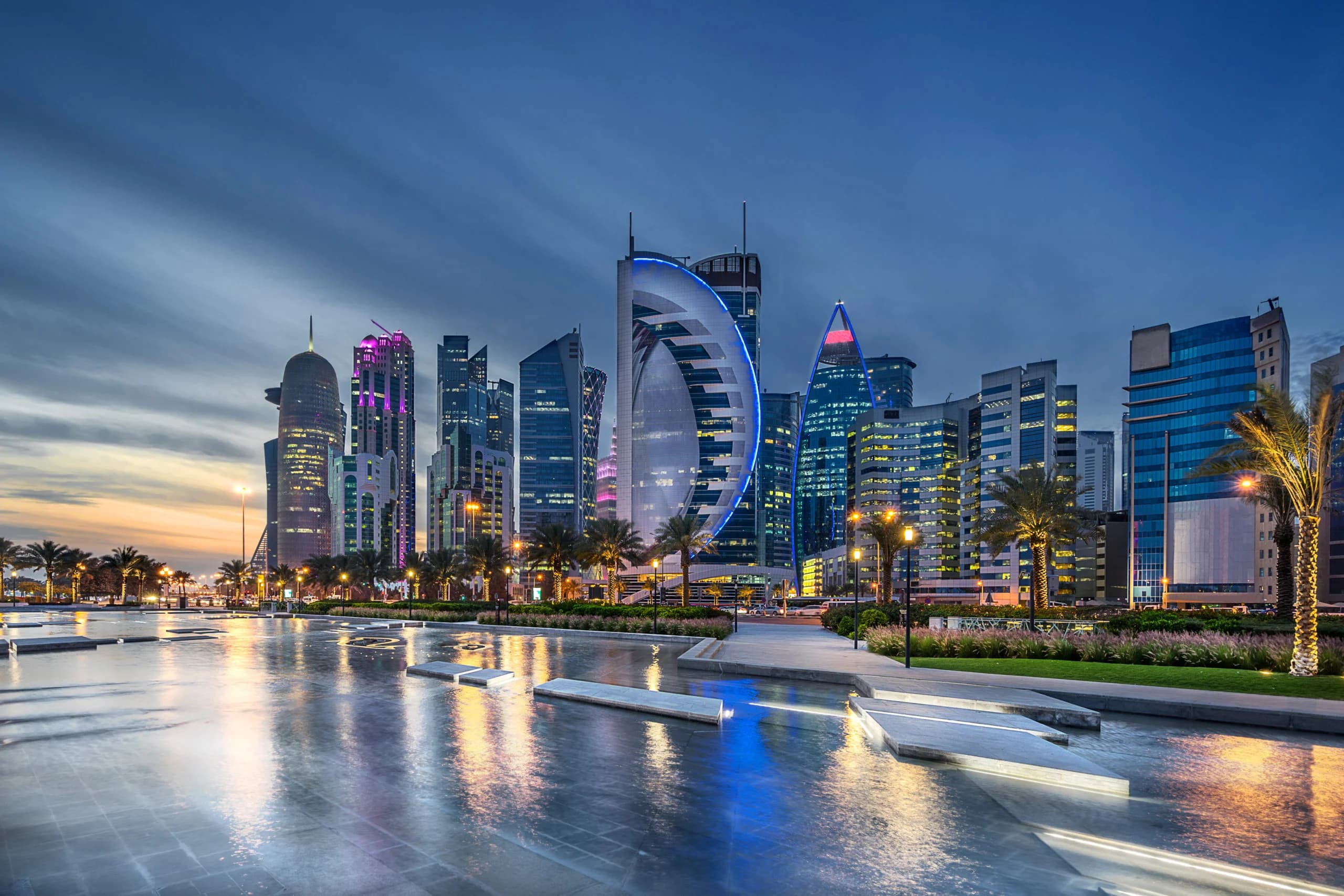
From there the Corniche runs north past the dhow harbour towards Souq Waqif, a walk of about 20 minutes that delivers the classic skyline view along the way. Dinner in the souq alleys closes it well.
Pairing two museums in one day works, but check the closing days first. The National Museum shuts on Tuesdays and the Museum of Islamic Art shuts on Wednesdays, so each of those days rules one of them out. The free shuttle runs between them on every other day.
Stay Nearby
Msheireb and the Souq Waqif area sit closest, both a short ride away and walkable in the cooler months, with the metro connecting you directly to the museum door.
West Bay puts the skyline on your doorstep and a 15 minute drive between you and the entrance. For a first trip built around culture and heritage, anywhere along the southern Corniche keeps most of this page within reach.
Frequently Asked Questions
Explore Tours
No tours found for Museum of Islamic Art right now.