
Museum of Islamic Art
Discover the Museum of Islamic Art
Most buildings sit inside a city. This one sits apart from it, out in the water, exactly as its architect wanted.
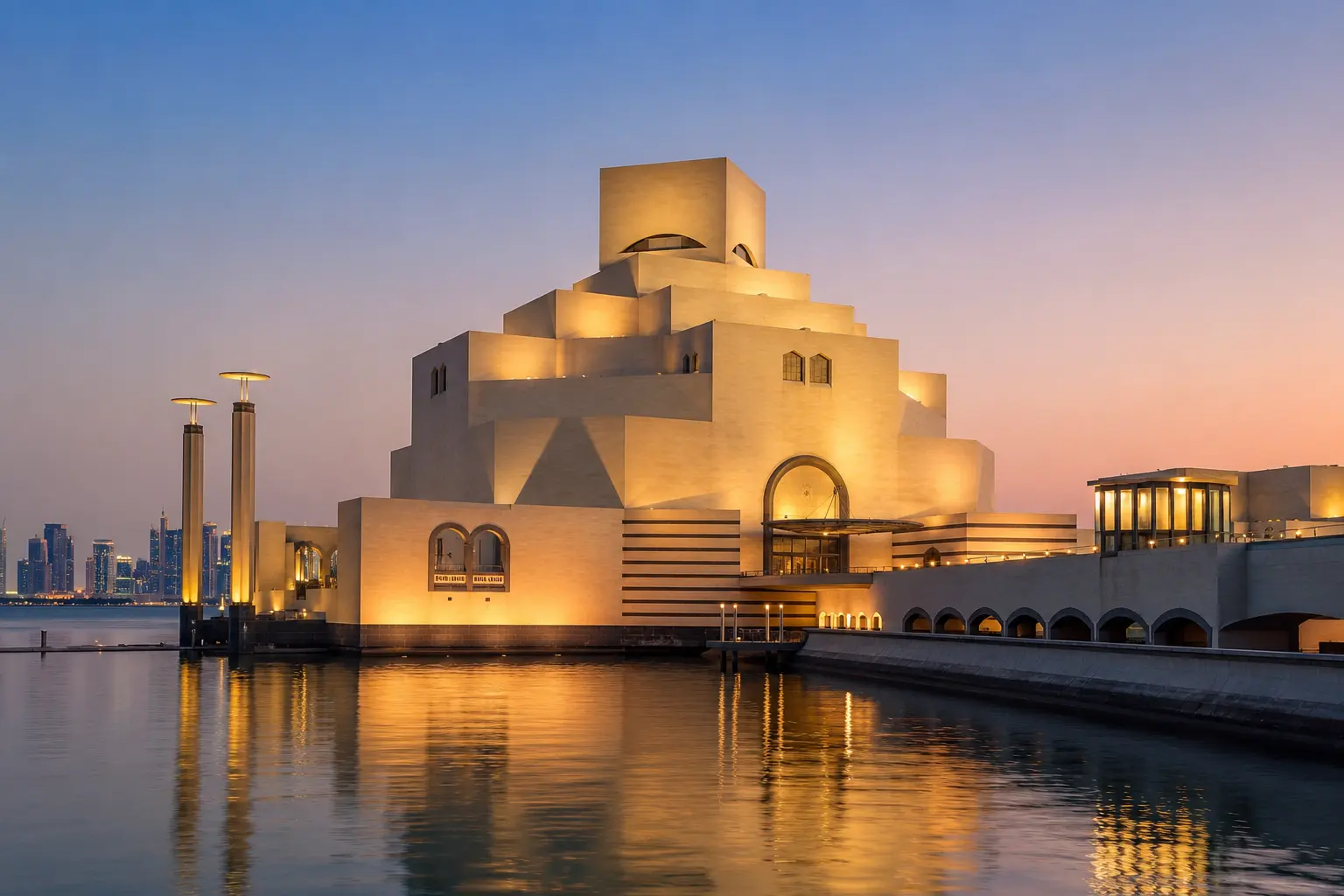
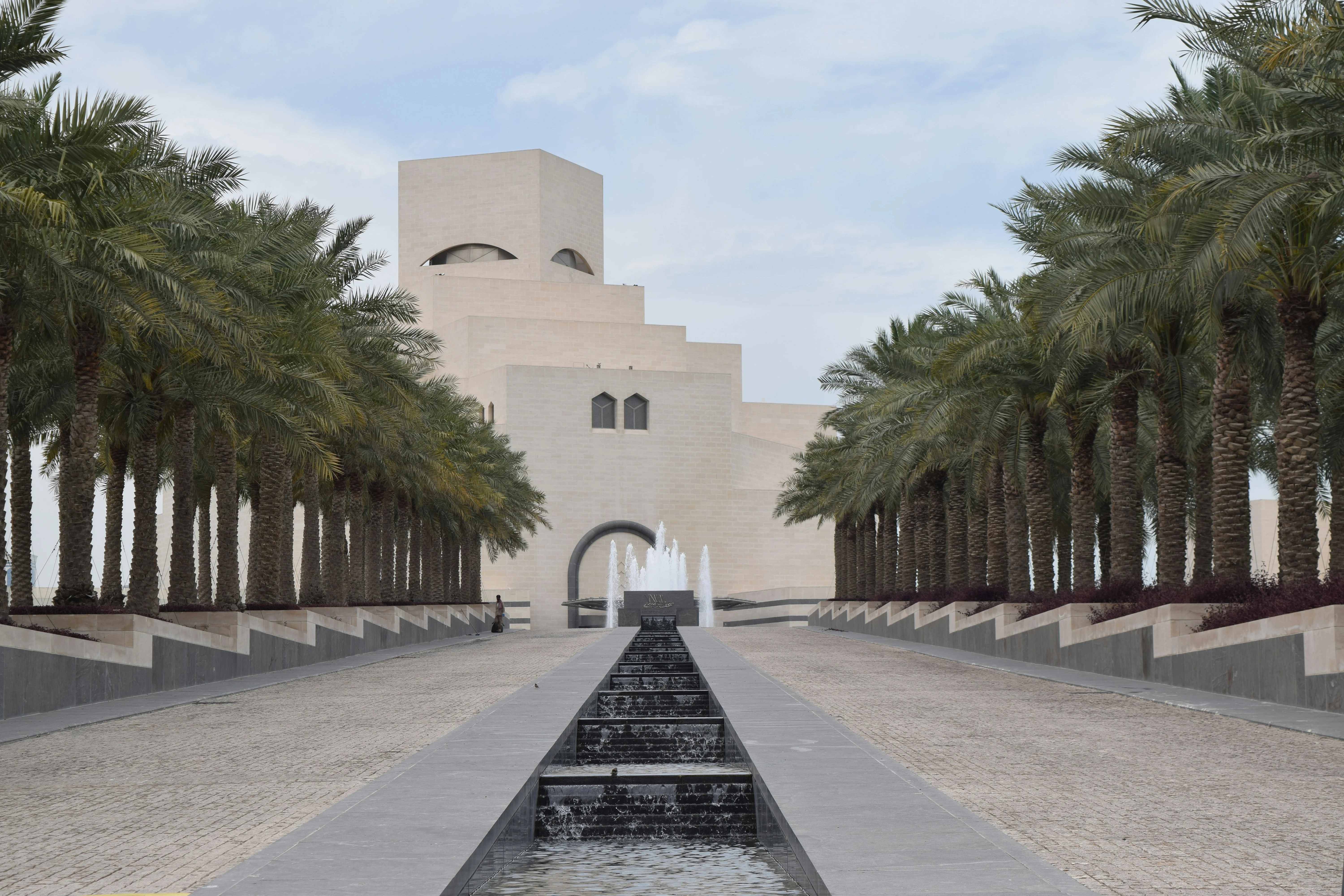
The Museum of Islamic Art stands on its own island at the southern end of the Doha Corniche. A causeway lined with palms and reflecting pools carries you across. I. M. Pei was in his nineties when he took the commission, and he asked for the island himself. He wanted certainty that nothing would ever be built close enough to crowd it.
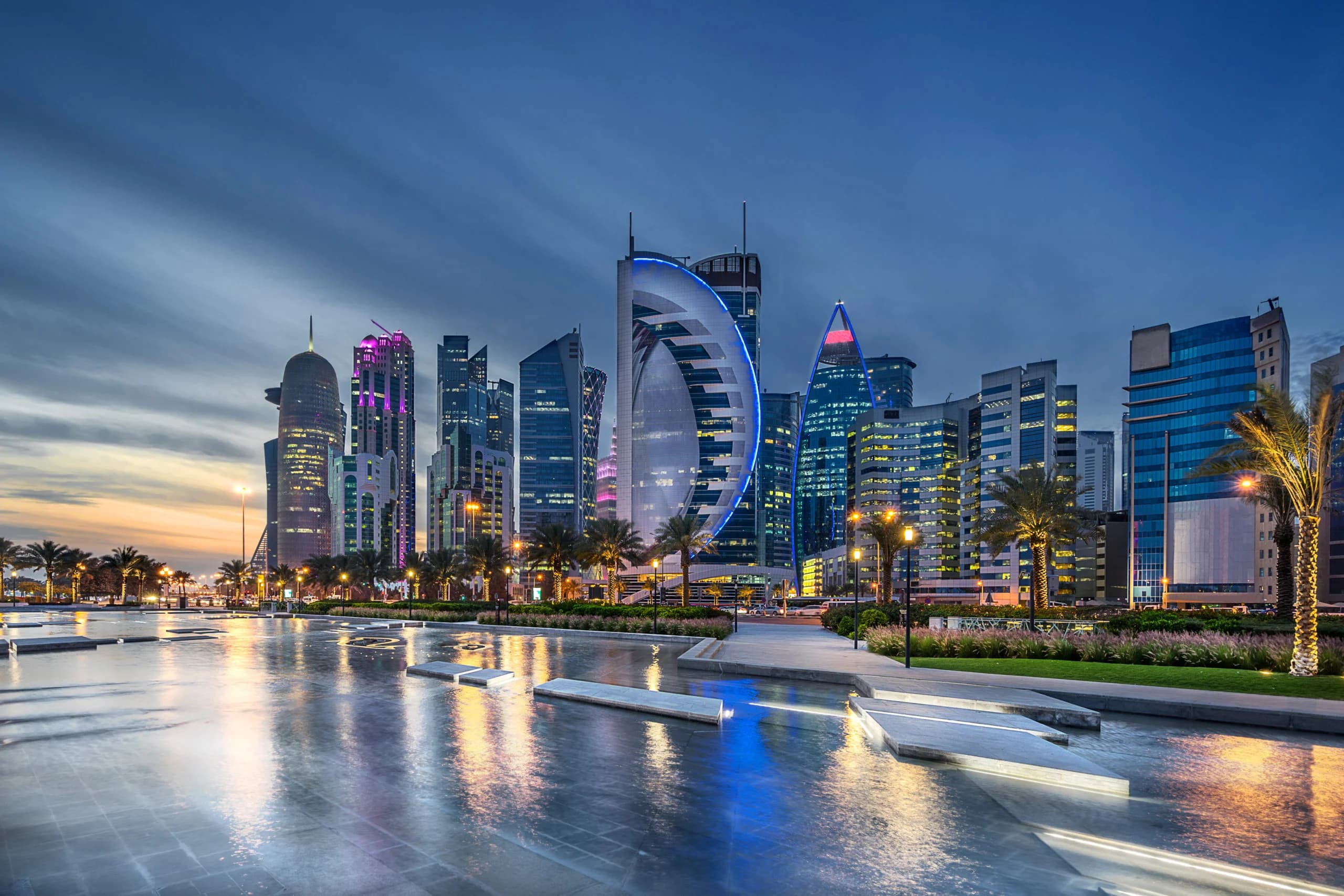
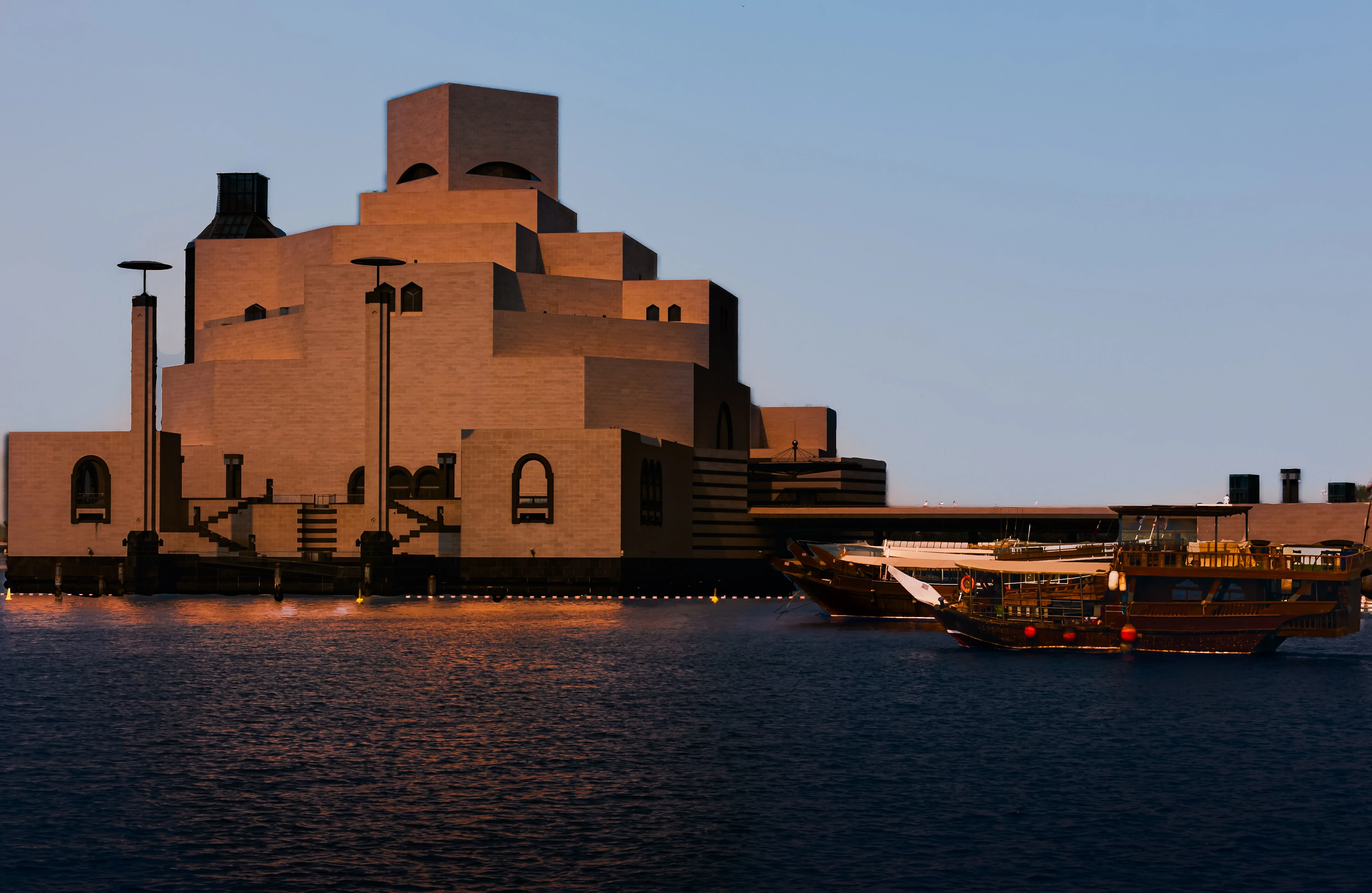
That decision still holds. MIA stands alone in the bay in cream limestone, its stacked geometric shapes catching the light differently through the day, with the towers of West Bay glittering behind it.
Inside are four floors of galleries. They hold one of the most complete collections of Islamic art in the world, gathered from Spain to India and spanning the 7th to the 20th centuries. Outside is a waterfront park that never closes and offers the best free view in Doha.
Most visitors come for the collection. Many leave talking about the building. Give yourself time for both.
Why the Museum of Islamic Art Is Famous
MIA opened in 2008 as the first museum Qatar Museums ever built, and it changed how the region was seen. Before it, the Gulf was known for airports and skylines. After it, Doha had a cultural landmark that art critics flew in to write about.
Three things built that reputation. The first is the architect. I. M. Pei had already given the world the glass pyramid at the Louvre and came out of retirement to design this one, then spent months travelling the Islamic world to find a form worth building. The result is regularly named among the finest museum buildings of its era.
The second is the collection itself. Very few museums anywhere hold Islamic art at this depth, and almost none present it across three continents and 1,400 years under one roof. Pieces here regularly travel to major institutions abroad on loan.
The third is what the museum means locally. MIA became the image Qatar chose to show the world, appearing on currency, stamps and the global broadcast of the 2022 World Cup. It is the shorthand for Doha in the same way the Opera House is shorthand for Sydney.
Known for: One of the world's most comprehensive collections of Islamic art
Architect: I. M. Pei, designer of the Louvre pyramid, on his final major commission
Setting: A purpose built island at the end of the Corniche, chosen so nothing could crowd it
Opened: 2008, with the galleries fully reimagined and reopened in 2022
Status: Qatar's flagship cultural institution and the country's most photographed building
A Building Worth the Journey
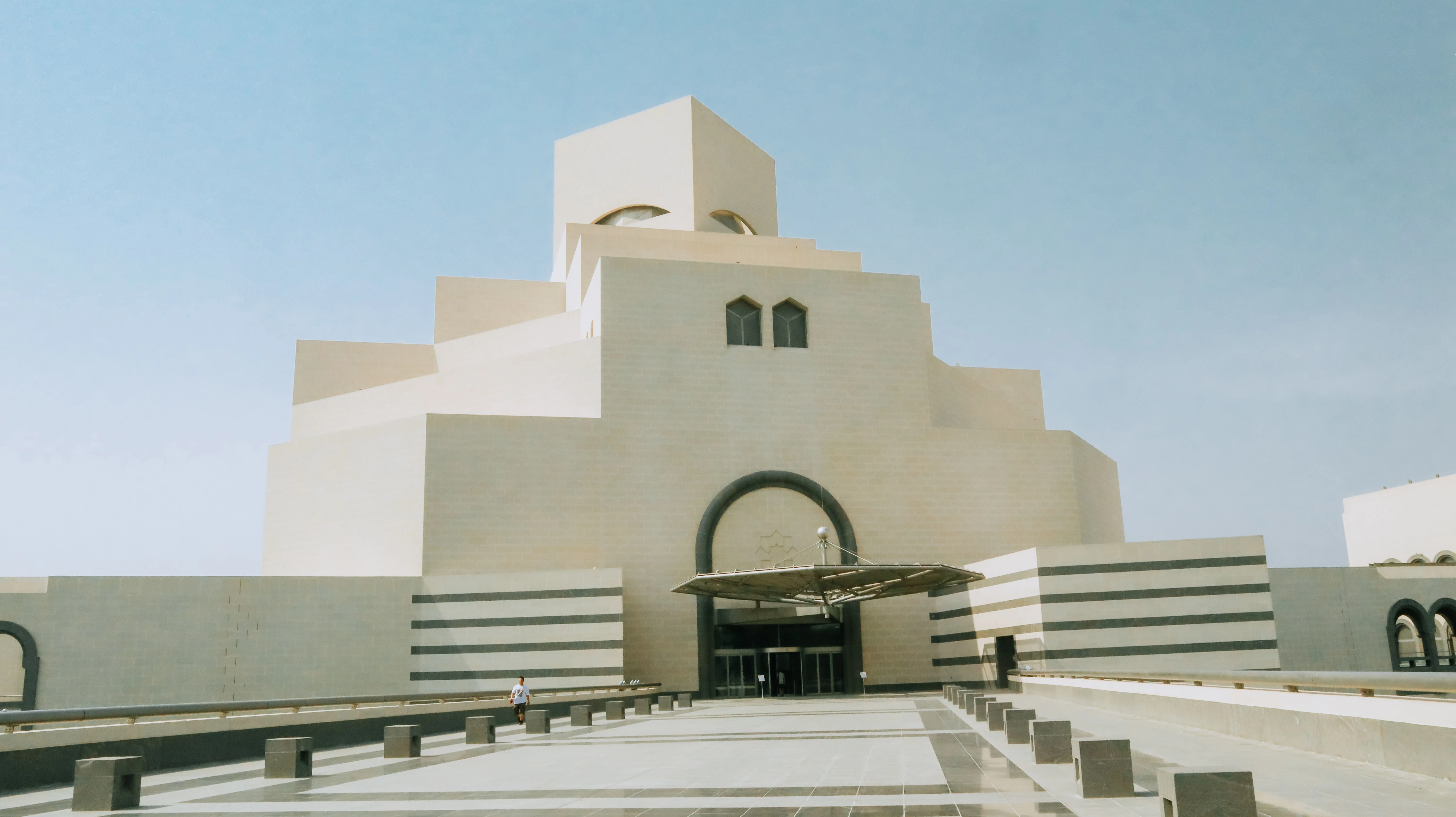
Pei spent months travelling the Islamic world before he drew anything. He found what he was looking for in Cairo, at the ablutions fountain of the Mosque of Ahmad Ibn Tulun. There, geometry does the work that decoration does elsewhere.
The museum grew from that idea. Cubes turn and stack as they rise. Shadows move across the facade through the afternoon. The building reads differently depending on where you stand on the Corniche.
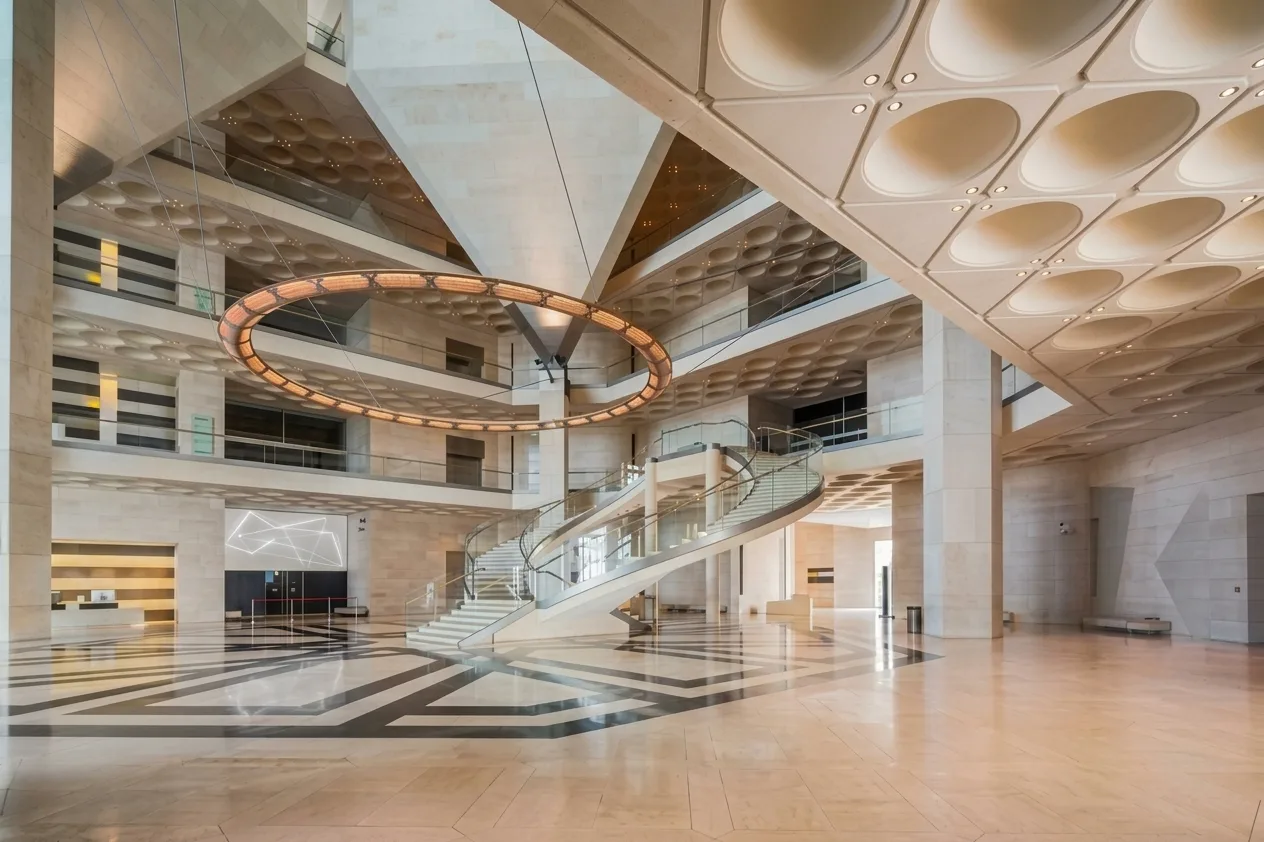
Step inside and the space opens upward through five storeys. A faceted dome sits high above, cut with a single opening that scatters patterned light down the walls. The light shifts slowly across the stone as the hours pass.
A curved double staircase drops through the centre. On the north side, one sheet of glass frames Doha Bay like a canvas. Visitors stand there a long time before remembering there is a museum to see.
Inside the Galleries
The collection was reinstalled and reopened in 2022. It is now arranged by theme, period and region, so you can follow it without any background in Islamic art.
The Written Word
Illuminated Qurans, scientific manuscripts and calligraphic panels. Together they show how the written word became the central art form of the Islamic world. Some pages are worked so finely that the ink still catches the light.
Metalwork, Glass and Ceramics
Inlaid brass from Egypt. Lustre glazed bowls from Iraq. Enamelled glass from Syria. Stay a while and the old trade routes appear on their own. Chinese porcelain shaped Persian potters. Damascus glass turned up in Venetian workshops.
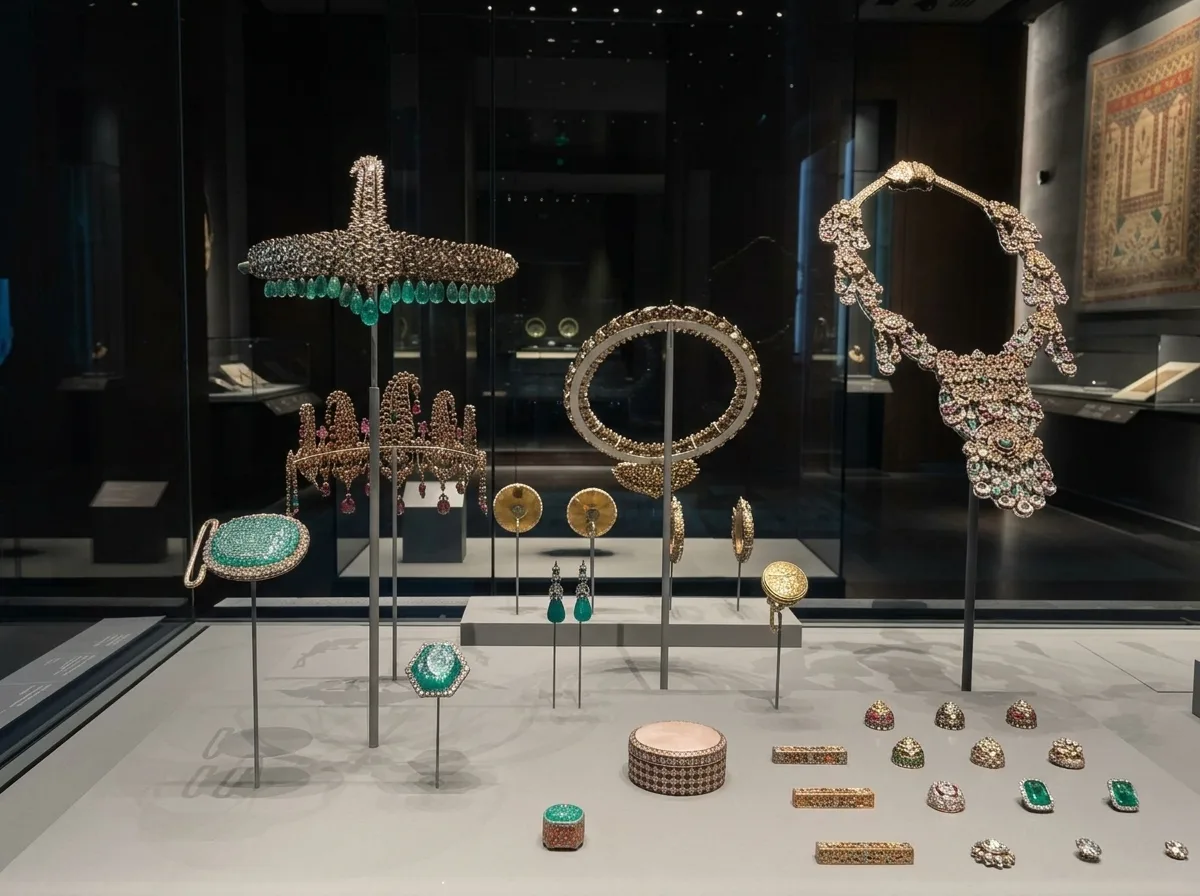
Jewels and Textiles
Mughal jade carved thin enough to see through, gemstone set daggers, Ottoman silks and large carpets. The Mughal cases draw the biggest crowds in the building. Visit them early if you want them quiet.
Changing Exhibitions
MIA runs a rotating programme of temporary shows. Many are built around Qatar's Years of Culture partnerships and borrow from major collections abroad. Check what is on before you come, as some are ticketed separately.
The Library
More than 21,000 volumes on Islamic art, one of the largest collections of its kind in the region. The reading room has its own view of the bay. It is open to visitors and is quietly one of the best rooms in the building.
MIA Park
The park wraps around the museum across 62 acres of waterfront. It is free, it never closes, and it asks nothing of you.
Richard Serra's steel sculpture 7 stands at the end of a pier like a full stop on the bay. A crescent promenade runs the shoreline with a clear view back to West Bay. There are lawns, playgrounds, a carousel, bike and kayak hire, outdoor cafes and a regular run of markets, film screenings and workshops.
Come at sunset. The light turns gold on the limestone, the towers switch on across the water, and the reason for building out here becomes obvious.
Eat, Drink and Take Something Home
MIA Cafe on the ground floor handles coffee, pastries and light meals between galleries.
IDAM by Alain Ducasse sits on the top floor. It pairs French cooking with Mediterranean and Arabic influence, an interior by Philippe Starck, and windows the full width of the bay. It books out quickly, and opening arrangements can change, so confirm directly before planning an evening around it.
The gift shop is better than most. The pieces are designed around the collection rather than pulled from a catalogue.
Visitor Essentials
Opening hours: Saturday to Tuesday 9am to 7pm. Thursday 9am to 9pm. Friday 1:30pm to 7pm. Closed Wednesdays.
Admission: Free for Qatar and GCC residents and for children aged 16 and under. Non resident adults pay a standard fee, with a reduced student rate. Check current pricing on the official Qatar Museums ticketing page.
Booking: Tickets are sold on arrival, but booking online secures a time slot. Worth doing on Thursday and Friday evenings.
Time needed: Two to three hours inside. Half a day with the park.
Facilities: Cloakroom, prayer rooms, family facilities, free wheelchair and stroller loan, multilingual audio guides, cafe, restaurant, gift shop, Wi-Fi.
Access: Step free throughout, with lifts to all floors and accessible restrooms. Golf buggies run between the car park and the entrance.
Dress: Modest dress covering shoulders and knees, in line with Qatar Museums guidance.
Photography: Allowed for personal use in most areas, without flash or tripods. Some temporary exhibitions do not allow it.
MIA Park: Open 24 hours and free, including Wednesdays when the museum is closed.
Getting Here
Metro: Gold Line to Souq Waqif or National Museum station, then a 15 to 20 minute walk along the Corniche. Pleasant from November to March, hard work in summer.
Taxi: About 15 minutes from Hamad International Airport and under 10 from West Bay. There is a taxi rank in the car park and more on the Corniche outside the gate.
Free shuttle: Qatar Museums runs a complimentary shuttle between MIA, the National Museum of Qatar and other venues.
Car: Parking is limited and fills fast on weekends. It closes entirely during major events in MIA Park, so have a fallback.
On foot: Roughly 25 minutes from Souq Waqif along the waterfront.
Make a Day of It
MIA sits at the hinge of Doha's cultural quarter, which makes it easy to build a day around.
Start mid afternoon in the galleries, then walk out into the park as the heat drops. From there the Corniche runs north past the moored dhows and Flag Plaza. That stretch takes about 15 minutes on foot and gives you the classic skyline view. Finish at Souq Waqif for dinner once the lamps come on.
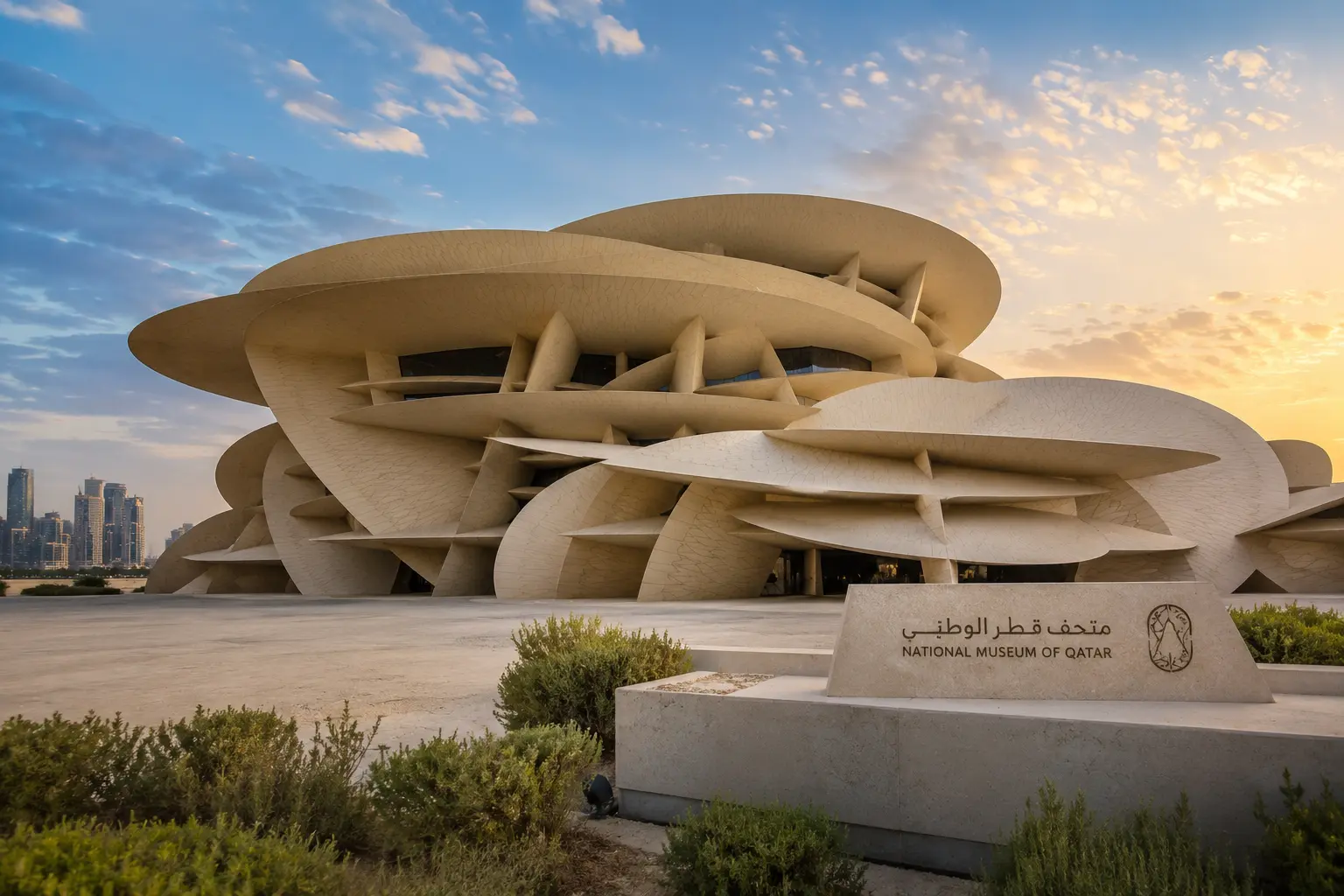
Want two museums in one day? Pair MIA with the National Museum of Qatar and take the free shuttle between them. One covers the Islamic world. The other tells the story of Qatar itself.
Stay Nearby
The Msheireb and Souq Waqif area puts you closest. It is a short taxi ride away and walkable in the cooler months.
West Bay sits across the water with the skyline on your doorstep and a 10 minute drive to the causeway. For a first trip built around culture and heritage, anywhere between Souq Waqif and the Corniche keeps most of this page within reach.
Check availability and rates for hotels near the Museum of Islamic Art on Booking.com.
Frequently Asked Questions
Explore Tours
No tours found for Museum of Islamic Art right now.