
Sheikh Faisal Bin Qassim Al Thani Museum
Discover the Sheikh Faisal Bin Qassim Al Thani Museum
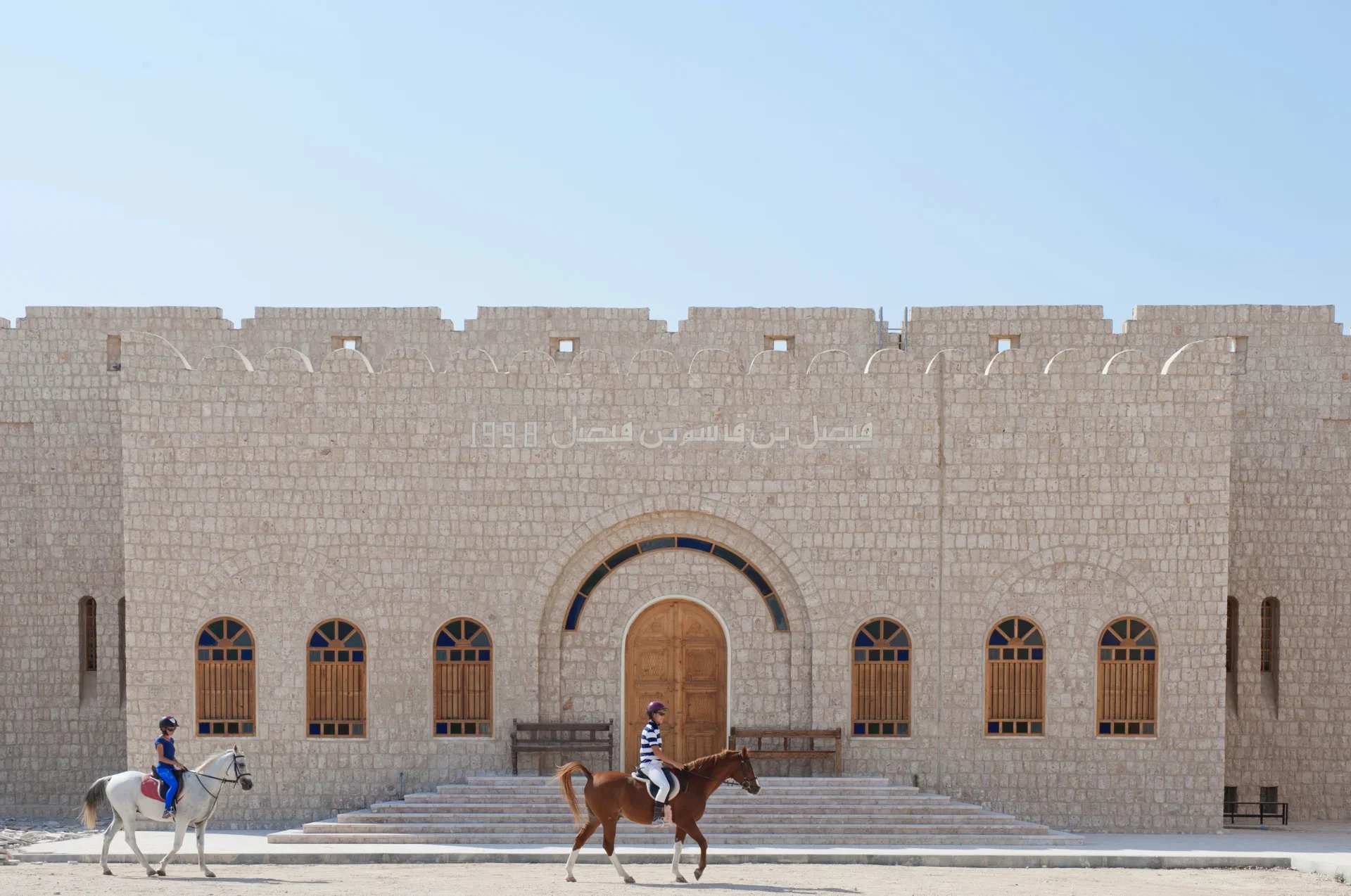
Drive west out of Doha on the Dukhan Road, past Mall of Qatar, and the city thins into open desert. Twenty minutes later a fort appears on the horizon, built of local stone with turrets at its corners, and you would be forgiven for assuming it had stood there for centuries.
It went up in the 1990s, to hold one man's collection. Sheikh Faisal Bin Qassim Al Thani spent decades gathering objects from across the world, and in 1998 he opened the result to the public as a non profit museum. It has been growing ever since.
Inside are more than 30,000 objects across twelve themes, running from Jurassic fossils through the early Islamic period to the present day. Rare Qurans and manuscripts. Bedouin silver and pearl diving gear. What the museum describes as the world's largest private collection of swords and weaponry. A nineteenth century Damascus house, dismantled in Syria and rebuilt here room by room.
Then you reach the car museum, and there are 400 of them, from the 1900s onwards.
There is no curatorial argument holding it together, and that is the point. It calls itself a modern cabinet of curiosities, and it earns the description. Most visitors plan an hour and stay for three.
Why This Museum Is Unlike Any Other in Qatar
The institutions on the Corniche are national museums with curators, committees and a story to tell. This one is a person.
Sheikh Faisal is a Qatari businessman and philanthropist who began collecting young and never stopped, and the museum still reflects his eye rather than any museological logic. A tenth century Quran sits a few halls from a 1950s Cadillac. Fossils share the building with Ottoman armour and household objects from pre oil Qatari kitchens.
That abundance is the appeal. You see things here that would sit in storage anywhere else, displayed in volume across twelve themed sections. The Qatar heritage rooms are particularly good on ordinary life before oil, the sort of everyday objects the grander museums represent with one or two pieces behind glass.
The building matters too. Rather than commissioning a modern gallery, Sheikh Faisal built a fort in traditional Qatari style on his own estate, so the collection sits inside something that is itself part of the collection.
Known for: One of the world's largest private collections, and a fort built to house it
Founded: 1998, by Sheikh Faisal Bin Qassim Al Thani, as a non profit museum
Collection: More than 30,000 objects across twelve themes, plus 400 classic cars
Setting: Al Samriya Estate on the Dukhan Road, around 22km west of central Doha
Status: Privately founded, ticketed, and the most surprising museum in the country
A Fort Built for the Collection
The building is made of local stone with traditional turrets, and it was designed as a collector's piece in its own right, deliberately set against the pace of Qatar's modern development.
Inside, halls run into one another in a way that rewards wandering rather than following a route. Some are high ceilinged and formal. Others feel closer to a treasury, packed floor to ceiling. Carpets cover the floors through the older sections, doors are carved and inlaid, and light drops in through small high windows the way it does in old Gulf buildings.
The scale takes a while to register, and the museum keeps expanding into the estate around it. The car museum is a recent addition, exhibitions rotate, and returning visitors regularly find halls that were not there before.
Step outside between galleries. The courtyards and the open desert horizon are part of the experience, and after the density inside, the space is welcome.
Inside the Collection
Twelve themes across dozens of halls. These are the ones worth prioritising.
The Qur'an Room and Islamic Art
One of the museum's two signature spaces. Qurans and manuscripts spanning centuries sit alongside calligraphy, ceramics, metalwork, inlaid woodwork and textiles gathered from across the Islamic world, tracing the visual culture that connects Southern Europe, North Africa, the Middle East and South Asia.
The Syrian House
The other signature space, and for many visitors the highlight of the museum. A nineteenth century house from Damascus, brought to Qatar and reassembled here with its courtyard, tiled walls, painted timber ceilings and lattice screens intact. Fully furnished, and you walk through the rooms rather than look into them.
Qatari and Bedouin Heritage
The heart of the museum for anyone interested in the country itself. Pearl diving equipment, coffee pots, cooking tools, textiles, furniture and Bedouin silver jewellery from Qatari life before oil, including objects from Sheikh Faisal's own family home, which gives the section a warmth the state collections rarely manage.
Swords, Weaponry and Curiosities
The museum holds what it describes as the world's largest private collection of swords and weaponry, alongside armour and militaria from across continents. Nearby you will find fossils dating back to the Jurassic period, scientific instruments, coins and currency, and taxidermy. This is where the cabinet of curiosities description makes complete sense.
The FBQ Car Museum
Around 400 classic cars in a dedicated museum on the estate, covering more than 120 years of motoring from the 1900s onwards. Classic saloons and trucks, sports cars, convertibles and limousines, including vehicles that speak directly to Qatar's own transformation. It is included in the standard museum ticket at no extra cost, and even visitors with no interest in cars tend to stay longer than they expected.
AI Samriya Estate
The museum sits within Al Samriya Estate, and there is more here than the galleries.
The estate runs an oryx reserve, home to the Arabian oryx, Qatar's national animal, brought back from the edge of extinction and now grazing in open enclosures. It makes the arrival considerably more interesting than a car park usually is, and it is the part children remember.
There is also a riding school on the estate, with stables, pony rides and riding programmes, which makes a longer visit possible if you are travelling with a family. The grounds themselves are landscaped with lawns and palms before the desert takes over again beyond the walls.
Check what is open and bookable before you go, since the reserve and the riding school operate separately from the museum and keep their own arrangements.
Eat, Drink and Take Something Home
There is a cafe on site, and it is the only place inside the museum where food and drink are allowed. Water is permitted throughout the galleries and actively encouraged, but everything else stays in the cafe, so plan a break rather than carrying a coffee round with you.
For a full meal, Mall of Qatar sits about fifteen minutes back towards the city with a large food hall and restaurants, and it is the natural lunch stop on the way home. If you are combining the museum with the camel racetrack at Al Shahaniya, eat either side of the trip, since options in between are limited.
The museum gift shop stocks books, replicas and pieces connected to the collection, and it makes for a more unusual souvenir than anything on offer in central Doha.
Visitor Essentials
Opening hours: Monday to Thursday 9am to 5pm. Friday 2pm to 7pm. Saturday 10am to 6pm. Closed Sundays.
Last entry: 30 minutes before closing.
Ramadan hours: Monday to Saturday 6:30pm to 11pm, closed Sundays. Confirm each year.
Admission: Around USD 14 (QAR 50) for adults, with reduced rates for groups of ten or more, students and young adults aged 13 to 22, seniors over 65, teachers, museum professionals and Culture Pass Plus holders. Free for children under 12, ICOM members, visitors with disabilities and their carer, and accredited press and tour guides. Check current pricing before you travel.
Guided tours: Available subject to availability for a small additional charge per person, and well worth arranging. Interpretive signage is limited and a guide transforms the visit.
Booking: Tickets can be bought online in advance or on arrival. Group and school visits are booked separately.
Time needed: Two to three hours for the main halls and the car museum. Longer with the estate.
Facilities: Cafe, gift shop, cloakroom, restrooms, prayer facilities and free parking. A museum app and a virtual tour are also available.
Access: Strollers are allowed and assistance dogs are welcome. The museum is large and involves considerable walking, and some carpeted sections can be slippery underfoot.
Gallery rules: No touching exhibits, no flash photography, no selfie sticks, no food, drink or chewing gum outside the cafe, and pencils only for sketching. Large bags go in the cloakroom.
Note: The FBQ Carpet Museum, with over 600 carpets, is a separate collection held in Doha city centre and viewable by appointment only. It is not at Al Samriya.
Getting Here
By car: The only practical option. Around 30 to 40 minutes from central Doha along the Dukhan Road, heading west past Mall of Qatar. Parking is free and plentiful.
Taxi or ride hailing: Straightforward heading out, but arrange your return in advance. Coverage this far from the city is thin and waits can be long.
Metro: No station nearby. The Green Line reaches Mall of Qatar, but you still need a taxi from there, so the metro does not usefully serve this trip.
Organised tours: Several Doha operators include the museum, often paired with the Al Shahaniya camel racetrack. Check whether the entrance fee is included, as it frequently is not.
Before you set off: Confirm the day. Sunday closure means an hour of driving for nothing, and Friday opening is afternoons only.
Make a Morning of It
This is a half day out of the city, and it pairs with the desert side of Qatar rather than the Corniche.
Leave Doha by half past eight and arrive at opening, when the halls are quiet and cool. Take the Qur'an Room and the Islamic art first while your attention is sharp, then the Syrian House, then the Qatari heritage rooms. Save the car museum for last, since it is the easiest to enjoy once you are tired.
Break at the cafe, then walk out to the oryx reserve before you leave. If you are travelling with children, do the animals first and let the collection come second.
For a fuller day, add the Al Shahaniya camel racetrack nearby. Training runs happen early morning through the cooler months, so an early start gets you the camels first and the museum by opening time. Lunch at Mall of Qatar on the way back puts you home with the afternoon still ahead of you.
Stay Nearby
There is accommodation on the estate itself, which suits anyone who wants to take the collection slowly and see the desert setting in the evening rather than driving straight back.
Otherwise, base yourself in Doha and treat this as a morning excursion. West Bay, Msheireb or the Souq Waqif area all leave you a 30 to 40 minute drive away, with far more to do either side of the visit.
Frequently Asked Questions
Explore Tours
No tours found for Museum of Islamic Art right now.