

What is a Desert Safari in Doha? Everything a First Timer Needs to Know
Posted on:
July 3, 2026
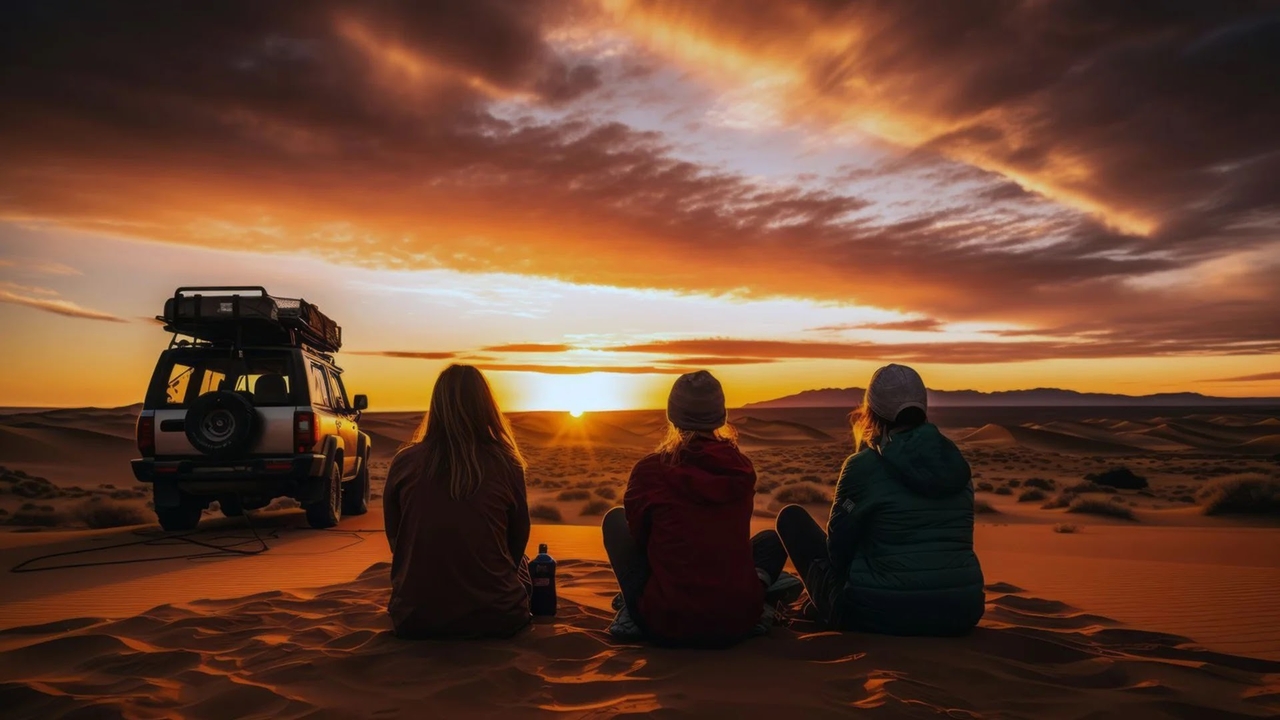
A common question from first-time visitors to Qatar is what exactly a desert safari involves. While exploring things to do in Qatar, you will likely notice desert safari consistently ranking at the top of travel blogs, recommendation lists, and travel forums, and it is also highly rated across platforms like TripAdvisor, Viator, and Trip.com. This popularity is well-earned, as it is considered one of the most essential experiences in the country. A desert safari in Doha is an exciting adventure experience that takes you into the heart of Qatar’s stunning desert landscapes. It combines adventure, culture, and stunning natural scenery in the vast Arabian desert just outside the city. But if you've never done one before, the name alone doesn't tell you very much.
What actually happens out there? Where does the tour go? What will you see? Who is it suitable for? And what makes Qatar's version worth choosing over anything else on a Qatar itinerary?
These are the questions every first-timer has before booking. This guide answers all of them honestly and in full, covering what a desert safari is, where it comes from, where it takes you, what you'll experience along the way, and everything you need to know before you go. By the time you finish reading, you'll have a complete picture of what to expect, and the confidence to book the right experience for your trip.
The Simple Answer: What Exactly is Desert Safari?
A desert safari in Doha is a guided excursion into the Qatari Doha desert that combines adventure, sightseeing, and cultural experiences in one trip. It takes you out of the city and into Qatar's southern desert landscape for a set number of hours. You travel in a 4x4 vehicle, typically a Toyota Land Cruiser, with a trained specialist driver and, depending on the package, a dedicated guide. Along the way, the tour combines adventure activities, breathtaking natural scenery, and genuine cultural immersion into a single, well-organised experience.
The word "safari" in this context doesn't carry the same meaning it does in East Africa, where the focus is wildlife observation from open vehicles. In the Arabian Gulf, a safari refers to the journey itself, the act of venturing into the desert, navigating its terrain, and experiencing the landscape from within rather than observing it from a distance. There are no lions. There are, however, camels, towering golden dunes rising to 40 metres and above, a rare inland sea enclosed entirely by desert, a Bedouin-style camp with traditional food and hospitality, and more variety packed into a single outing than most guided experiences anywhere in the world manage across an entire day. Desert safaris in Doha typically depart from hotels in the city centre during the afternoon, travel south toward Qatar's interior desert and the Inland Sea (Khor Al Adaid), and return to Doha by evening, or the following morning if you've chosen an overnight stay. The core experience combines dune bashing, sandboarding, a camel ride, a stop at the Inland Sea, and time at a traditional desert camp. The exact combination and duration of each activity depends on which package you choose.
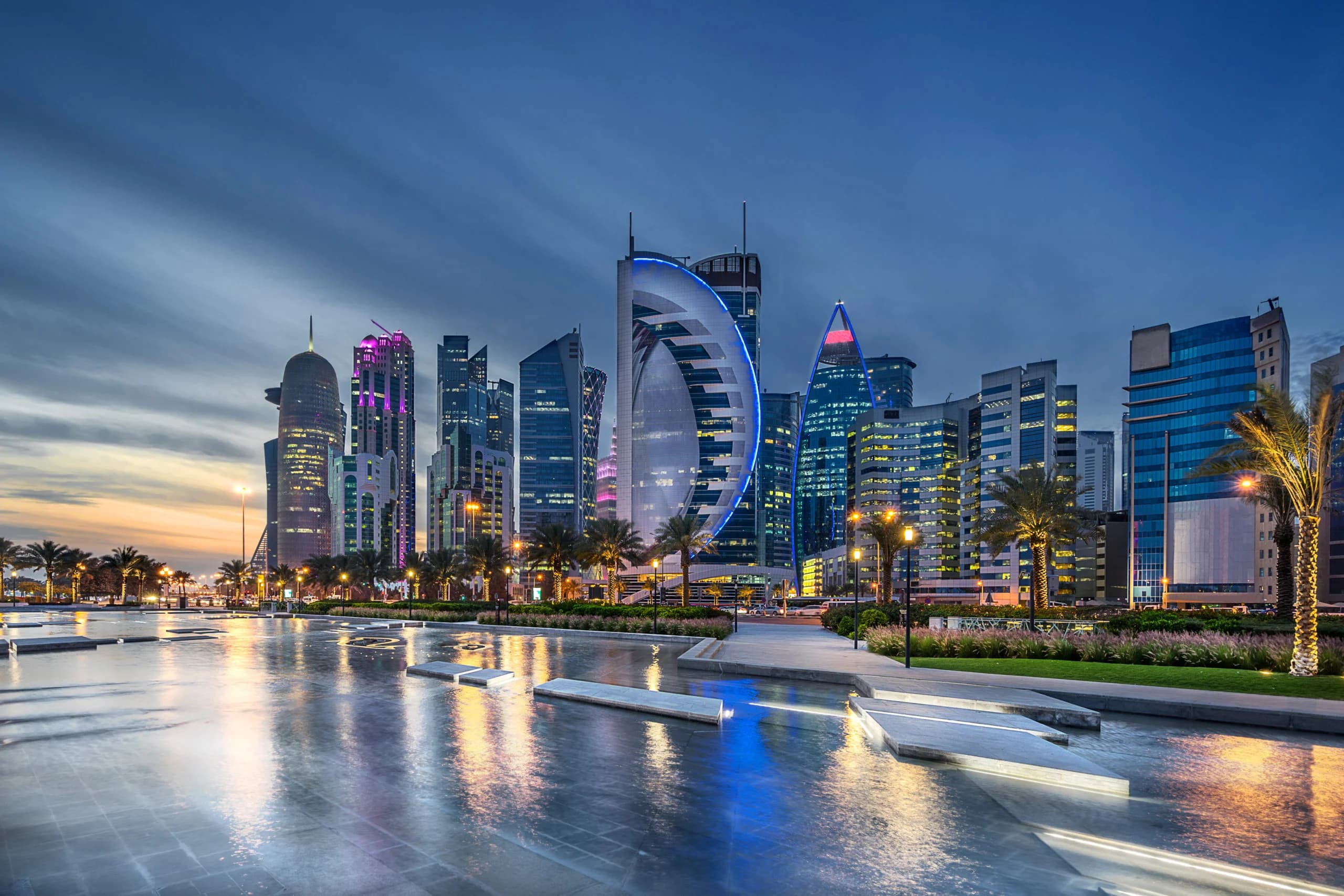
What makes the experience work on a deeper level is contrast. Within the space of a single afternoon, you move from one of the most modern, air-conditioned cities in the world to a landscape that has changed very little over centuries. The shift from glass towers and highways to open dunes, firelight, and total silence is something that photographs simply do not prepare you for, and something that most first-timers find genuinely affecting long after the tour ends.
History of Desert Safari in Qatar
To understand what a desert safari is today, it helps to understand where it comes from, because the activities and traditions that make up a modern Doha safari are not invented for tourists. They are rooted in a way of life that shaped Qatar and the broader Arabian Peninsula for centuries.
The Bedouin Origins
Long before Doha became a modern city, Qatar's interior was home to Bedouin communities; nomadic and semi-nomadic tribes who lived in and moved across the desert according to the seasons, water sources, and grazing routes for their livestock. The desert was not a backdrop or a destination. It was home, workplace, and highway simultaneously. Bedouin life was built entirely around the ability to navigate, survive, and thrive in an environment that most outsiders would find inhospitable.
Camels were central to this existence. They provided transport, milk, meat, and leather. They could carry heavy loads across hundreds of kilometres of sand and survive days without water in extreme heat. The camel was not simply a useful animal; it was the economic foundation of Bedouin life in the desert, and the cultural significance it carries in Qatari society today is a direct inheritance from that relationship. When you take a camel ride on a desert safari in Doha, you are participating in a tradition that is genuinely ancient and genuinely meaningful to the people of this region.
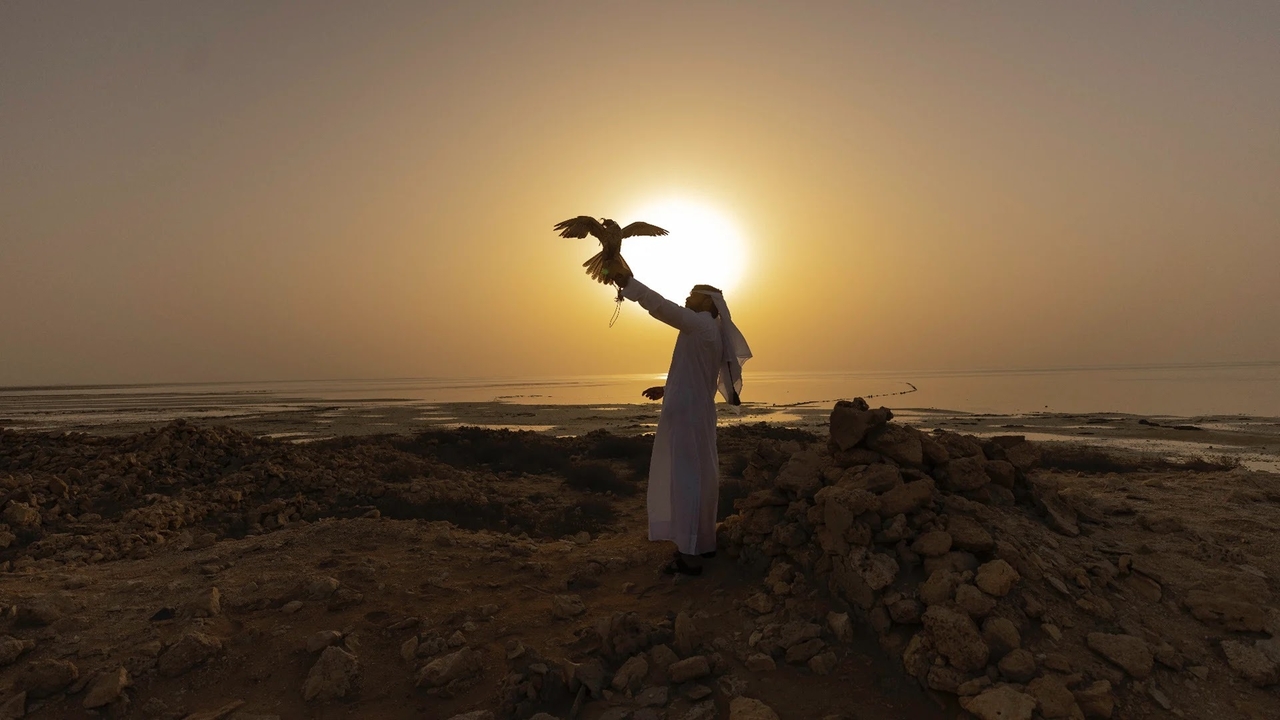
Falconry is another tradition with deep Bedouin roots. Falcons were trained by desert communities to hunt prey across open terrain, a practical necessity in an environment where food sources were scarce, and hunting required both skill and a reliable animal partner. Falconry in Qatar predates modern history by well over a thousand years, and the tradition was formally recognised by UNESCO in 2016 as an Intangible Cultural Heritage of Humanity. The falcon handling experiences available on premium desert safari packages in Doha are a continuation of this tradition, not a recreation of it. For further cultural context on falconry and Bedouin heritage, Discover Qatar provides well-researched background that adds genuine depth to what you encounter on the tour.
The open-sided majlis tent, the Arabic coffee ceremony, the communal fire, and the tradition of hospitality toward guests in the desert; all of these are Bedouin in origin, and all remain central to the camp experience on a modern desert safari. They were the customs of communities for whom welcoming a traveller into camp, offering them coffee, food, and shelter, was a moral obligation as much as a social one. The warmth of the camp experience on a Doha safari is not a manufactured atmosphere. It is culture.
How the Desert Safari Became a Tourism Experience
The transition from Bedouin tradition to organised tourism experience is relatively recent, and it happened gradually across the Gulf region over the latter decades of the twentieth century. As oil wealth transformed Gulf cities from modest coastal settlements into major urban centres, the desert that had once been the primary living environment of the region's population became increasingly distant from daily life. For a new generation of Gulf residents and the growing numbers of international visitors arriving in cities like Dubai and Doha, the desert became something to visit rather than something to live in.
In Qatar specifically, the development of desert tourism accelerated alongside the country's broader tourism ambitions in the 2000s and 2010s. The construction of modern Doha, the expansion of Hamad International Airport into one of the world's major transit hubs, and Qatar's growing profile as a travel destination all created an audience, both international visitors and Doha residents seeking weekend escapes, for structured desert experiences. Local operators began offering guided dune driving tours, initially informal and later increasingly professionalised, that combined the thrill of 4x4 desert driving with traditional cultural elements drawn from Bedouin heritage.
The Inland Sea (Khor Al Adaid) became central to Qatar's desert tourism identity as its unique qualities became better known internationally. UNESCO recognition of the site as a natural reserve brought further attention and established it as the defining geographical highlight of any Doha desert safari, the feature that sets Qatar's version of the experience apart from desert tours elsewhere in the Gulf.
Today, desert safari tourism in Qatar is a regulated, professionally managed industry operating under the licensing framework of the Qatar Tourism Authority. The experience has evolved significantly from its informal origins, but the cultural foundations it draws on; camel riding, falconry, Bedouin hospitality, and the deep human relationship with the desert landscape- are entirely genuine, and understanding that history makes the experience considerably richer.
Why the Tradition Still Matters Today
Qatar has made a deliberate effort to preserve and celebrate its Bedouin heritage alongside its rapid modernisation. The annual Katara Traditional Dhow Festival, the National Museum of Qatar's extensive documentation of Bedouin life, and the prominence of falconry in Qatar's cultural diplomacy all reflect a national commitment to keeping these traditions visible and meaningful.
A desert safari in Doha is, in this context, more than a tourist activity. Qatar Tourism Official Report 2025 recorded over 10.8 million hotel nights, with adventure activities like dune bashing and Doha deserts tour among the highest-rated experiences on every major platform. It is one of the most accessible ways for a visitor to encounter living Qatari culture in its original environment; not in a museum display or a heritage village, but in the actual landscape that produced it. The camp, the coffee, the camels, and the silence of the desert at night are all part of a continuum that stretches back centuries, and the best operators in Doha take genuine pride in presenting that context rather than simply delivering an adrenaline package.
Where does a desert safari in Doha actually take place?
The Route South from Doha
Most tours take the main southern highway out of Doha before turning off onto unpaved desert tracks heading toward Qatar's interior. The drive is approximately 80 kilometres from the city centre to the Inland Sea, taking around 45 to 60 minutes depending on traffic leaving the city. During this transfer, the landscape changes progressively; the architecture gives way to open highway, the highway gives way to flat desert, the flat desert gives way to low dunes, and finally to the towering sand formations of the southern dune fields. By the time your driver stops to deflate the tyres, the city has completely disappeared from view.
Khor Al Adaid: The Inland Sea
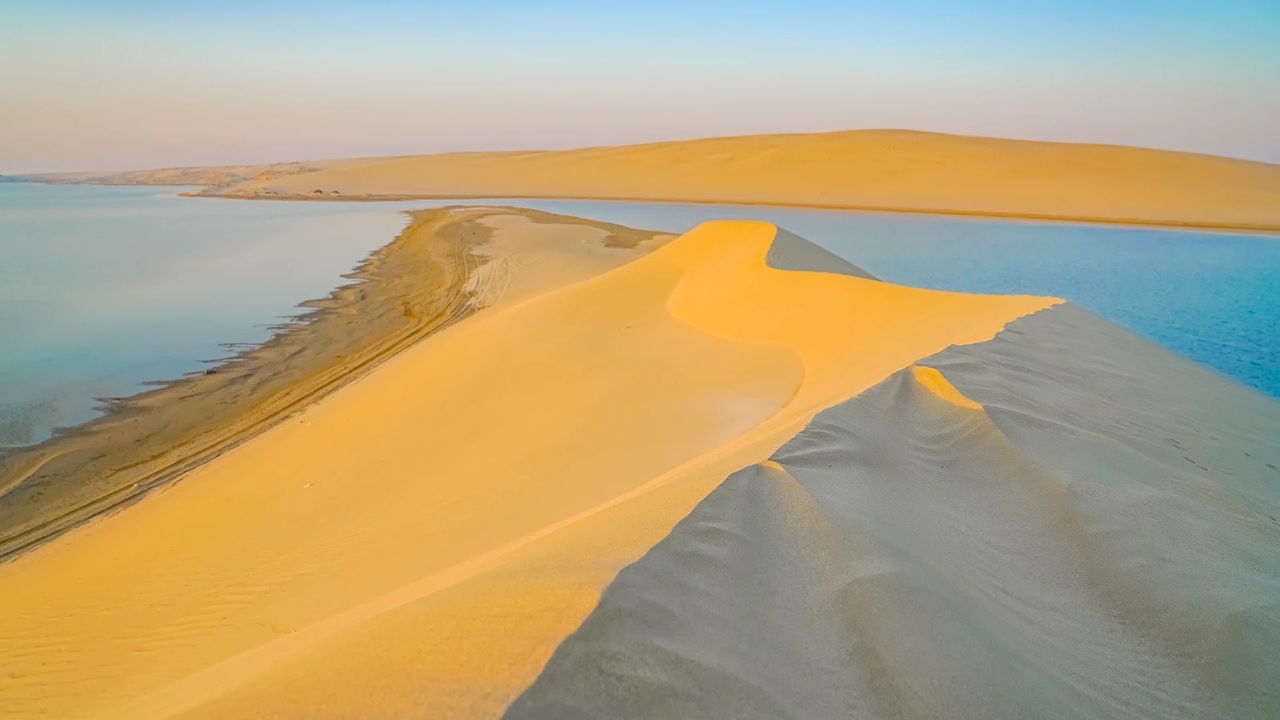
The centrepiece of most Doha desert safaris is Khor Al Adaid, a UNESCO-recognised natural reserve and one of the Arabian Peninsula's most remarkable natural wonders, frequently featured among the top-rated attractions in Qatar on travel platforms like Viator and Trip.com. A narrow channel connects the Arabian Gulf to a body of water that pushes several kilometres inland, enclosed on three sides entirely by desert dunes. The result is a landscape where golden sand and open water meet in a combination that exists almost nowhere else on earth.
The dunes around Khor Al Adaid rise to 40 metres and above. Standing at their base with the water in front of you is a visual experience that consistently surprises first-timers; the scale, the colour, and the silence of the place produce a reaction that photographs don't accurately anticipate. It is not a managed attraction or a constructed tourist site. It is a protected natural reserve, and the only practical way to visit it is as part of a desert safari tour departing from Doha.
The Open Desert
Beyond the Inland Sea, the southern Qatari desert is characterised by rolling dune fields, flat sandy plains, and a near-total absence of development. There are no roads, no buildings, and very little noise beyond wind and the sound of the vehicle. The scale consistently surprises visitors from dense urban environments; Qatar is a small country by land area, but its desert feels immense and open in a way that is genuinely unusual. The contrast with Doha, just an hour away, is one of the most striking aspects of the experience.
Why choose a desert safari in Doha over other activities?
Choosing a desert safari offers a unique blend of adventure, cultural immersion, and breathtaking natural beauty that sets it apart from a typical city tour or beach holiday. It’s an opportunity to escape the urban landscape and dive into the authentic Arabian experience.
Here are the key reasons why a desert safari is an exceptional choice for your next trip:
A unique combination of Thrill and Serenity
Unlike most other activities on a Qatar itinerary, a desert safari doesn't ask you to choose between excitement and relaxation; it delivers both, in sequence, within the same experience. That balance is rare and is one of the primary reasons it appeals to such a wide range of travellers.
Adrenaline-Pumping Adventures:
The experience typically opens with dune bashing Doha, where a trained specialist driver navigates a powerful 4x4 vehicle over towering dunes at speed, creating a roller-coaster sensation with steep climbs, dramatic drops, and sharp sideways slides that you cannot replicate in any city-based activity. For those who want to push further, quad biking allows you to take independent control across the open dune terrain, while sandboarding down the golden slopes delivers its own brand of fast, physical excitement that surprises most first-timers with how enjoyable it is even without prior experience.
Moments of Tranquillity:
Once the high-adrenaline segment winds down, the desert reveals an entirely different side of itself. Watching the sun drop below the endless dunes at golden hour; the light shifting through amber, orange, and deep red as the sky changes around you; is one of the most genuinely peaceful experiences Qatar offers, and one that no amount of urban sightseeing can replicate. On overnight tours, the desert after dark goes even further: the campfire settles, the noise of the day disappears entirely, and the night sky opens up in a way that is only possible far from city light pollution. The contrast between the energy of the afternoon and the stillness of the evening is what makes the desert safari feel complete rather than one-dimensional.
Cultural Deep Immersion
A desert safari provides a level of cultural immersion that goes significantly beyond what most visitors' experiences in Doha can offer. It is not a passive observation of culture behind glass; it is participation in traditions that have shaped this landscape and its people for centuries.
Traditional Camp Life:
Most safaris culminate at a Bedouin-style desert camp, where the pace slows entirely, and genuine Arabian hospitality takes over. Guests are welcomed with Arabic coffee, lightly spiced with cardamom and served in small handleless cups, alongside fresh dates. This is not a symbolic gesture. The offering of coffee and dates to a guest in the desert is a tradition rooted in Bedouin culture that carries real meaning in Qatari society, and the best camp operators present it with the care and context it deserves. The open-sided majlis seating, the lanterns, the rugs on the sand, and the central fire all create an atmosphere that is authentic rather than staged.
Authentic entertainment :
The evening programme at most desert camps includes live cultural performances that are genuinely captivating. Belly dancing, the Tanoura, a hypnotic spinning dance rooted in Sufi tradition, performed in a colourful layered skirt that fans out dramatically as the dancer spins, and fire shows all create a lively, communal atmosphere that brings the camp to life after the quiet of the sunset. These performances are a regular feature of Gulf desert hospitality and draw enthusiastic reactions from first-time visitors regardless of age or background.
Cultural Activities:
Beyond watching, there are opportunities to participate directly in the culture of the desert. Getting a henna tattoo, a tradition with deep roots across the Arab world, is popular with visitors of all ages. Trying a shisha pipe, dressing in traditional Arabic attire for photographs, and taking a short camel ride all offer hands-on engagement with a way of life that most international visitors have no other practical opportunity to experience. These are not novelty additions; they are genuine cultural practices, and engaging with them thoughtfully adds a dimension to the safari that purely activity-focused tours cannot match.
A Feast for the Senses
The culinary experience on a full-day or overnight desert safari is a highlight that many first-timers don't fully anticipate until they're sitting at the camp table with the desert stretching out around them. A freshly prepared BBQ dinner buffet typically features a generous spread of grilled meats: chicken, lamb, and kofta, alongside fresh salads, rice dishes, warm bread, and a selection of traditional Arabic accompaniments. The food is prepared on-site, served hot, and presented in a setting that no restaurant in Doha can match: open sky above, sand underfoot, firelight nearby, and the silence of the desert in every direction. Eating a good meal outdoors in genuinely remote surroundings has a quality to it that elevates even familiar food, and the combination of the day's activity, the cool evening air, and the smell of grilled meat over an open fire produces a sensory experience that guests consistently describe as one of the most memorable meals of their trip.
Unparalleled Scenery and Photography
The Qatari desert provides a visual environment that is dramatic, constantly changing, and extraordinarily photogenic, and it does so across every hour of the day in a different way. The vast rolling dune fields of the south, with their warm golden-orange colour and clean geometric ridgelines, offer a natural backdrop that requires very little compositional effort to photograph well. The landscape during golden hour, the 30 to 40 minutes before sunset when the sun sits low and casts long directional shadows across the dune faces, reaches a visual quality that professional photographers travel specifically to capture. The combination of a camel silhouette against that light, or a sandboarder mid-descent with the dunes stretching to the horizon behind them, produces images that look genuinely extraordinary with nothing more than a smartphone. The Inland Sea adds a further dimension; the contrast of golden sand and deep blue water in the same frame is a composition available nowhere else in the Gulf region. For travellers who care about photography, the desert safari offers more varied, more dramatic, and more memorable shooting opportunities than any other single experience in Qatar.
Convenience and Value
Desert safari tours in Doha are designed to be entirely hassle-free from the moment you confirm your booking, and the all-inclusive nature of most packages means there are very few decisions left to make on the day itself.
Hotel Pickup and Drop-off:
Every reputable operator includes direct collection from your hotel and a return transfer at the end of the tour. There is no need to arrange independent transport, navigate unfamiliar roads, or find your own way to the desert. The driver comes to you, and the entire logistical burden of the day is handled for you from start to finish.
Hotel Pickup and Drop-off:
Every reputable operator includes direct collection from your hotel and a return transfer at the end of the tour. There is no need to arrange independent transport, navigate unfamiliar roads, or find your own way to the desert. The driver comes to you, and the entire logistical burden of the day is handled for you from start to finish.
All-inclusive Packages:
The price of most desert safari packages covers transportation in an air-conditioned 4x4, all core activities including dune bashing, sandboarding, and a camel ride, the Inland Sea visit, a BBQ meal on full-day and overnight tours, soft drinks and bottled water throughout, and all cultural camp experiences. What you pay at booking is, in most cases, what the day costs; with the only additional expenses being optional add-ons like quad biking, sand skiing and tips for your driver and guide.
Family-Friendly Fun:
The variety and flexibility built into a desert safari itinerary means there is genuinely something for every member of a mixed group. Younger children enjoy the camel ride and sandboarding. Older children and teenagers get the most from the dune bashing. Adults who prefer a slower pace can opt out of specific activities without missing the overall experience. And the camp, with its food, fire, and open space, is a setting that works equally well for a five-year-old and a seventy-year-old. Very few experiences in Qatar combine this breadth of appeal with this level of logistical simplicity, and that combination of quality, variety, and ease is a significant part of why the desert safari sits at the top of so many visitor recommendation lists.
From the dramatic dunes of southern Qatar to the unique beauty of Khor Al Adaid, every desert safari offers a chance to experience a side of Qatar that few destinations can match. Reserve your desert adventure today and explore the Inland Sea, enjoy exciting desert activities, and create unforgettable memories in Qatar's spectacular landscape.
Khor Al Adaid (Inland Sea)
Khor Al Adaid (Inland Sea) is a remarkable destination and a UNESCO-recognized natural reserve, making it one of the few places on Earth where the sea pushes into the deep heart of the desert. This creates a stunning landscape of tranquil water surrounded by towering golden dunes.
Here is what you can do during your time at the Inland Sea:
Shoreline Walking & Exploration:
Once you arrive at the water's edge, you are free to walk along the shoreline at your own pace, taking in the stillness of the water and the scale of the surrounding dunes rising on every side. The contrast between desert and open water rewards slow exploration; most visitors walk further than they planned simply because the landscape keeps revealing new angles.
Swimming
The waters of Khor Al Adaid are calm, clear, and accessible for swimming near the shore. The Gulf water is warm for most of the year, and swimming here, with dunes rising dramatically on every side and no development visible, feels genuinely unlike any other swimming experience in the region.
Dune Climbing & Panoramic Views:
Climbing the surrounding dunes on foot rewards you with one of the most spectacular panoramic views in Qatar: the full extent of the enclosed water, the Gulf beyond, and uninterrupted desert in every direction. The climb takes around 10 to 15 minutes and is particularly extraordinary at sunset when the colours shift rapidly across both the sand and the water.
Wildlife Spotting:
As Qatar's largest nature reserve, Khor Al Adaid supports surprisingly diverse wildlife: turtles and flamingos near the shoreline, dugongs in the deeper Gulf waters, the occasional Arabian oryx in the surrounding desert, and various birds of prey and migratory species depending on the season. For more detail on the reserve's protected wildlife, the Qatar Ministry of the Environment maintains updated information on conservation status across the site.
Sunrise & Sunset Photography:
Golden hour at the Inland Sea is extraordinary; the dune walls turn deep amber and red while the water reflects the changing sky above. Sunrise on overnight tours offers an equally compelling but cooler, quieter version of the same landscape. Have your camera ready, and your battery charged well before either window arrives.
Boat Trips on the Water:
Some full-day and overnight packages include a short boat trip on the Inland Sea, giving you a perspective of the surrounding dune formations that is impossible from the shore. Confirm at booking if this is a priority, as not all operators include it as standard.
Sealine Beach
Sealine Beach sits at the point where Qatar's southern desert rolls directly down to meet the Arabian Gulf coastline, creating one of the most visually striking natural transitions on the entire safari route. Unlike the manicured beaches of central Doha, Sealine retains a raw, unhurried character, clean water, open sand, and dunes pressing right to the shoreline with no development interrupting the view.
Here’s what you do at the Sealine beach:
Swimming & Wading:
The water at Sealine is calm, shallow near the shore, and warm for most of the year, making it accessible and enjoyable for all ages. Wading in the Gulf with desert dunes visible directly behind you is a combination that exists almost nowhere else and makes even a short swim feel like something worth remembering.
Dune to Beach Sandboarding:
Where the dunes meet the shoreline,some operators offer sandboarding runs that finish at or near the beach. Sliding down a dune face toward open water is one of the more unusual and exhilarating activity combinations the southern safari route offers.
Shoreline Photography:
The visual contrast of golden desert dunes rolling directly into clear blue Gulf water in a single frame is rare anywhere in the world. Golden hour at Sealine, when the dune faces catch warm directional light just before sunset, produces photographs that are difficult to replicate anywhere else in Qatar.
Beachcombing & Relaxation:
Sealine's open, undeveloped shoreline is ideal for simply walking, sitting, and taking in the surroundings at a slower pace. After the intensity of the dune bashing segment, the sound of the surf and the open horizon of the Gulf provide a natural reset before the camp and cultural segments of the tour begin.
Local Culture Watching:
During peak season, Sealine is a popular gathering spot for Qatari families and residents enjoying the coast away from the city. Spending time here gives visitors an authentic, unscripted glimpse of how locals use and enjoy their own natural landscape, a dimension of cultural experience that no managed tourist attraction can replicate.
Sand dunes of Mesaieed
The dunes of the Mesaieed corridor form the dramatic backbone of the entire safari experience, substantial shifting formations reaching 30 to 40 metres in height with steep faces and sharp ridge lines that create ideal terrain for the tour's most thrilling activities. The warm golden-orange colour of the sand intensifies dramatically during golden hour, and the landscape you cross looks subtly different on every visit as wind continuously reshapes the surfaces overnight.
Here is what you do across the Mesaieed dunes:
Dune Bashing:
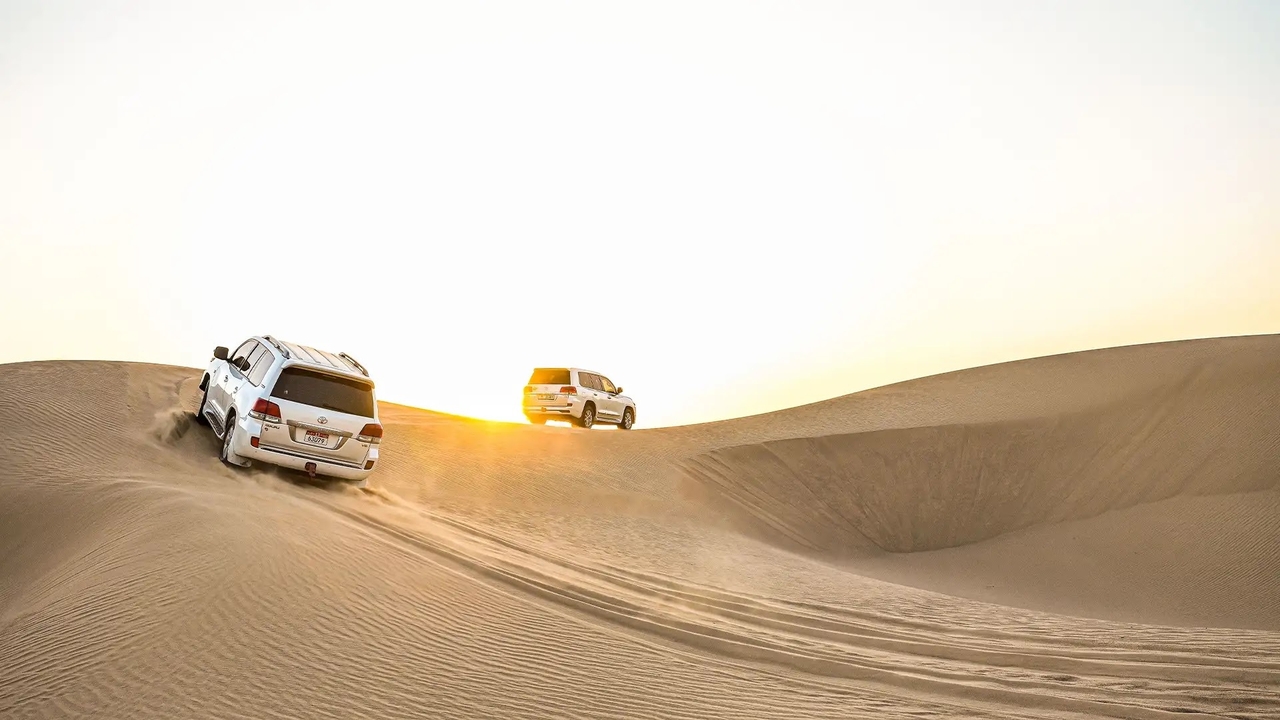
This is the headline activity of the entire tour and the terrain it was built for. Your specialist driver deflates the Land Cruiser tyres and takes the vehicle directly up, over, and across the dune faces, steep climbs, dramatic drops, sharp lateral slides, and sudden directional changes that produce a genuine roller-coaster sensation. Sessions last 30 to 45 minutes and are conducted by trained specialist drivers with seatbelts mandatory throughout.
Sandboarding:
After dune bashing, the same dune faces become your slope. Boards are provided, and the technique is demonstrated by your guide before the first run. You can ride standing, faster and more technical, or sitting, which is easier and equally enjoyable. The Mesaieed dune gradients are long and consistent, giving you enough slope to build genuine speed before the run levels out at the base.
Quad Biking:
Available as a paid add-on at the dune site, quad biking gives you independent control of your own vehicle across the open desert terrain. It is the most physically active way to engage with the dune landscape and allows you to explore at your own pace rather than as a passenger.
Dune walking & ridge photography:
Walking the dune crests on foot, away from the vehicle and the group, gives you a completely different perspective of the landscape and some of the best photography opportunities of the entire tour. The ridge lines of the Mesaieed dunes are particularly dramatic in the late afternoon when the shadow and light split cleanly across each face, and the silence away from the vehicle is its own reward.
Sunset Viewing:
The Mesaieed dunes are one of the best natural vantage points in southern Qatar for watching the sunset. From a high dune crest, the sun dropping toward the horizon turns the entire landscape through amber, orange, and deep red, a visual sequence that most first-timers describe as one of the most beautiful things they have ever seen in a natural setting.
The Bedouin Camp Experience
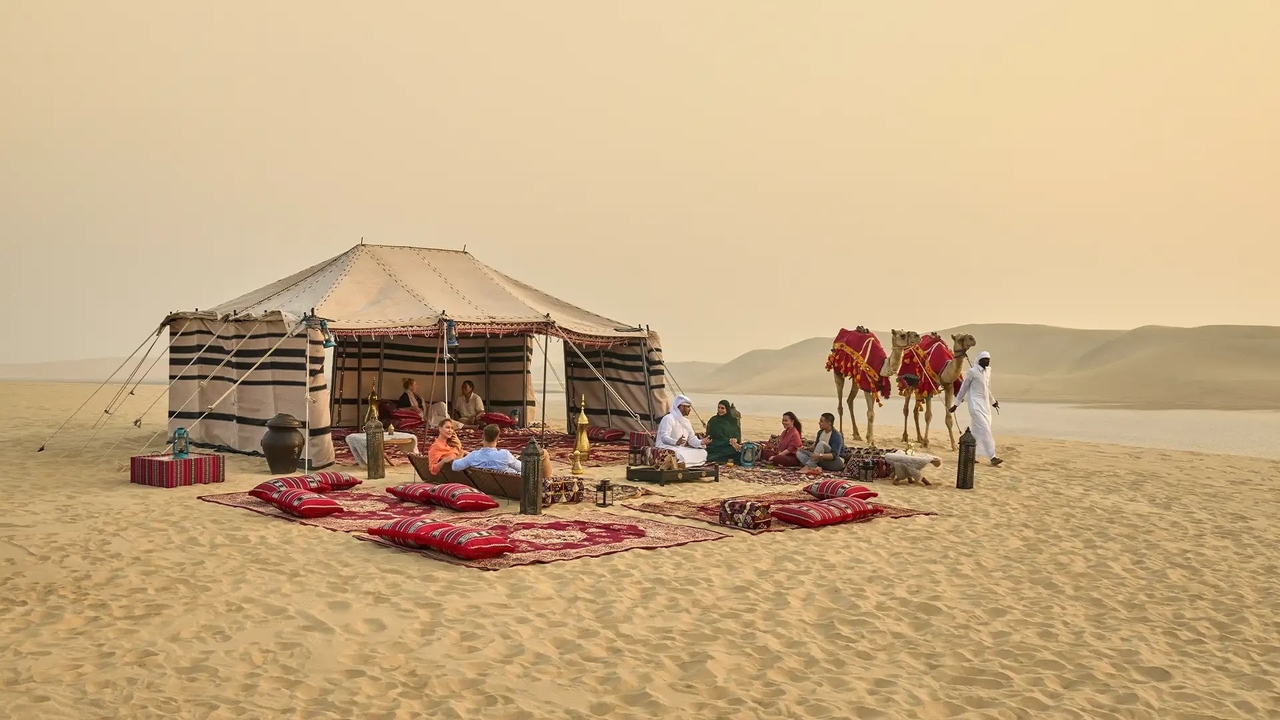
The Bedouin camp is the cultural heart of any full-day or overnight safari, set up in traditional Arabian style with open-sided fabric shelters, low majlis seating, rugs, lanterns, and a central fire. Arriving at the camp as the light drops and the desert quiets, after the high-energy activity segment, produces an atmospheric shift that most first-timers describe as the most unexpectedly moving part of the entire tour.
Here is what you experience at the Bedouin camp:
Arabic Coffee & Dates Welcome:
On arrival, you are welcomed with traditional Arabic coffee, lightly spiced with cardamom, served in small handleless cups, alongside fresh dates. This is a genuine expression of Bedouin hospitality with deep cultural roots rather than a simple refreshment gesture. Ask your guide about the tradition and the correct way to indicate you have had enough; the small details add real meaning to the moment.
Camel Ride
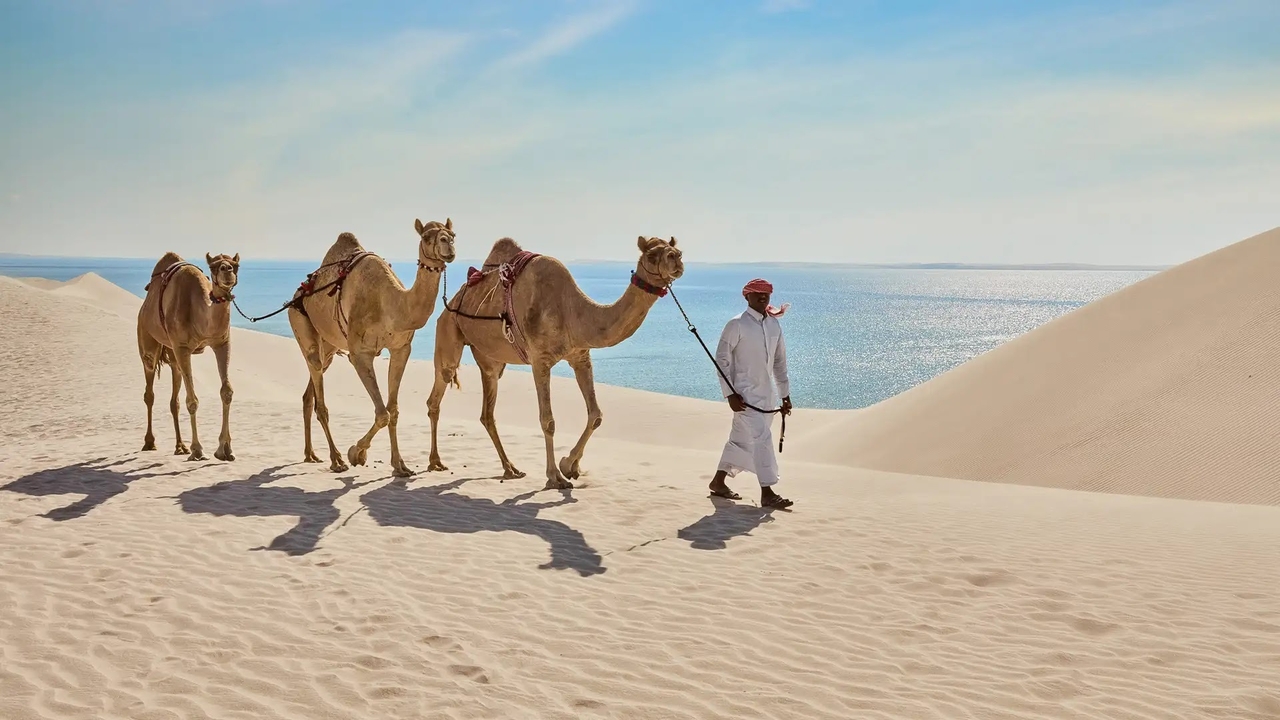
A short 10 to 15-minute camel ride through the surrounding dunes is included at the camp, typically timed to coincide with golden hour. A handler helps you mount while the camel is seated and leads the ride at a slow, rhythmic pace. The combination of camel silhouette and low desert light produces the single most photographed moment of any safari; have your camera ready before you mount.
Henna & Traditional Dress:
Henna application; intricate geometric patterns applied to the hands and arms; is available at most camps and popular with visitors of all ages. Traditional Arabic dress; the thobe and ghutra for men, the abaya for women, can also be tried on for photographs, providing a fun and respectful engagement with local dress culture that most guests enjoy more than they anticipated.
Shisha:
Traditional shisha is available at the camp for those who wish to try it. Sitting in open-sided majlis seating with a shisha pipe, firelight nearby, and the desert stretching out around you is an atmospheric experience that is very specifically Arabian in character and difficult to replicate anywhere outside this setting.
Evening Entertainment
The camp entertainment programme typically includes Tanoura spinning dance, a hypnotic performance rooted in Sufi tradition where the dancer spins continuously in a colourful layered skirt, alongside belly dancing and fire shows. Performed against a firelit desert backdrop with the open sky above, these performances create a lively communal atmosphere that draws every age group in equally and provides a natural social anchor for the group as the evening develops.
BBQ Dinner under the Stars:
A freshly prepared BBQ dinner is served buffet-style at the camp: grilled chicken, lamb, and kofta alongside rice dishes, fresh salads, warm bread, hummus, and traditional Arabic accompaniments. Eating a generous hot meal outdoors in a genuinely remote desert setting, with firelight and open sky, has a quality that no restaurant environment can match and consistently rates as one of the highest points of the entire safari experience.
Stargazing
On overnight tours, once the entertainment winds down and the camp settles into quiet, the desert sky becomes the final attraction. At 80 kilometres from Doha's city lights, the Milky Way is visible to the naked eye on clear nights, and the density of stars is genuinely startling for visitors from urban environments. Many overnight operators include a guided stargazing segment; even without one, lying on the sand and looking up for 30 minutes is an experience most people remember for years.
Who can Join a Desert Safari?
One of the genuine strengths of a desert safari in Doha is how broadly accessible it is. The Qatar Desert Experience is designed to accommodate a wide range of ages, fitness levels, and physical abilities, with activities that can be adjusted or opted out of individually without compromising the overall tour.
Families with Children
Desert safaris are well-suited to families with children of mixed ages. Younger children typically enjoy the camel ride, sandboarding in the sitting position, and the Inland Sea visit enormously; these are activities with very low physical barriers and high entertainment value. Older children and teenagers tend to get the most from the dune bashing segment. The camp provides a relaxed, open space where children can move around freely, and the food is accessible and familiar enough that picky eaters are rarely a problem.
The one activity to consider carefully for young children is dune bashing. The jolting and sudden directional changes can be frightening for very young children and are genuinely uncomfortable for children with any motion sensitivity. Most operators have a minimum age recommendation; typically around five to six years old for dune bashing, and will adjust intensity on request. Always check the operator's specific policy at the time of booking.
Couples
The desert safari is one of the most popular experiences for couples visiting Qatar, and it's easy to see why. The camel ride at sunset, the Inland Sea at golden hour, the campfire dinner, and the silence of the overnight desert all provide a backdrop for a shared experience that is genuinely difficult to replicate elsewhere. Many operators offer private tour upgrades that give couples complete flexibility over timing, pace, and the vehicle, worth considering for anniversaries or any occasions.
Solo Travellers
Group departures on shared 4x4 vehicles are the natural format for solo travellers, and the shared experience element is part of the appeal. Group sizes are typically small; up to six passengers per vehicle, and the nature of the activities creates easy conversation between people who were strangers at pickup. Many solo travellers report that a group desert safari is one of the best social experiences of their trip, regardless of where they're from or how long they're staying.
Older Travellers
Older travellers and those who prefer a more relaxed pace are well-catered for on full-day and overnight safaris, where the camp segment forms a significant part of the experience. The camel ride, Inland Sea visit, and camp time are all low-intensity activities that most older visitors find deeply enjoyable. The dune bashing segment can be adjusted; a good driver will calibrate the intensity based on the group's preference and will take a gentler route if passengers prefer it. Simply indicate your preference at the start of the tour.
People with Medical Conditions or Mobility Considerations
Dune bashing is not recommended for pregnant women or for anyone with back, neck, or heart conditions due to the sustained jolting and physical impact involved. However, these travellers can still join the tour and participate in all other activities comfortably. Inform your operator before booking; reputable operators will adjust the itinerary accordingly and ensure the experience is still rewarding without the dune bashing segment. People with limited mobility should also inform operators in advance so vehicle access and seating can be arranged appropriately.
From thrilling dune bashing and sandboarding to peaceful camel rides and scenic visits to the Inland Sea, Doha desert safaris offer something for every type of traveller. Choose the experience that suits your needs and reserve your desert adventure today for an unforgettable journey into Qatar's stunning desert landscape.
Can I do a desert safari on a layover in Doha?
Yes, a desert safari is entirely possible on a layover in Doha, provided your stopover is long enough. Hamad International Airport is one of the world's most connected transit hubs, and Qatar's straightforward visa-on-arrival policy for most nationalities makes leaving the airport during a layover simpler than most travellers expect.
The minimum practical window for a desert safari on a layover is around 8 to 10 hours of ground time. This accounts for clearing immigration, the transfer to your hotel or pickup point, the safari itself, and returning to the airport with enough buffer before your onward flight. A half-day safari, which typically runs 4 to 5 hours including hotel pickup and drop-off, fits comfortably within that window.
If your layover extends to 14 hours or more, a full-day safari becomes a realistic option, giving you access to the Inland Sea, the dune bashing segment, and a full camp dinner experience before your next flight.
The key steps are straightforward: confirm your nationality is eligible for a transit visa or visa-on-arrival, book your safari in advance with a reputable operator who offers airport-adjacent pickup, and build in at least 90 minutes of return buffer before your boarding time.
Basic Safety to Know Before Your Desert Safari
A desert safari in Doha is a well-regulated, professionally managed experience, and serious incidents are rare when you book with a licensed operator. That said, the desert is a genuinely remote environment, and a few straightforward precautions will ensure your day runs smoothly and comfortably from start to finish.
During Dune Bashing
Seatbelts are mandatory throughout the dune bashing segment and must remain fastened at all times, regardless of what you may see other passengers doing. The vehicle movements are sudden and unpredictable by design, and an unfastened seatbelt during a steep drop or lateral slide creates a serious injury risk. Do not attempt to brace yourself against the door, roof, or window during the drive; keep your body relaxed and let the seat and belt absorb the movement. If you feel unwell, nauseous, or genuinely frightened at any point, signal your driver immediately. A good specialist driver will stop without hesitation. There is no pressure to continue any activity beyond your comfort level.
Heat and Sun Exposure
Qatar's desert heat is not to be underestimated, particularly between April and October when temperatures in the southern dune fields can exceed 40°C during the afternoon hours. Even in cooler months, direct sun exposure on open dunes during active periods like sandboarding and dune climbing carries a real dehydration risk. Drink water consistently throughout the day, not just when you feel thirsty. Reputable operators provide bottled water throughout the tour, but bringing your own additional supply is always sensible. Apply sunscreen before departure and reapply after any water activities at the Inland Sea. A light, long-sleeved layer protects against sun exposure during open-air segments without causing overheating.
Footwear and Clothing
Closed-toe shoes or trainers are strongly recommended for dune activities. Sandals and flip-flops are impractical on steep sand slopes and do not protect against quad biking. Sand works its way into everything, so avoid bringing valuable open-weave bags or electronics without protective cases. Loose, breathable clothing is the most practical choice for the active segments of the tour. At the camp in the evening, temperatures drop noticeably after sunset, particularly between November and March, so bring a light jacket or layer regardless of how warm the day felt on departure.
Swimming at the Inland Sea
The waters of Khor Al Adaid are calm near the shore, but the Inland Sea is a tidal body of water with currents that can strengthen away from the shoreline. Swim close to the bank and avoid venturing into deep water. There are no lifeguards on site. Children should remain within arm's reach of an adult at all times near the water's edge, and non-swimmers should stay in the shallower sections regardless of conditions.
Staying with the Group
The southern Qatari desert has no signage, no roads, and no landmarks that are distinguishable to an unfamiliar visitor. Do not walk away from the group or vehicle without informing your guide of your direction and intended return time. This applies particularly during the Inland Sea visit and any free-roaming time on the dunes. Mobile phone signal is limited or absent in the desert interior, and finding a separated individual on foot in open dune terrain takes significantly longer than most people anticipate.
Medical Conditions
Dune bashing is not suitable for pregnant women or anyone with back, neck, or heart conditions. If you have any existing medical concerns, inform your operator at the time of booking rather than on the day. Carry any personal medication, including antihistamines, asthma inhalers, or motion sickness tablets, in your day bag rather than in the main vehicle storage. If you are prone to motion sickness, take any preventative medication at least 30 minutes before the dune bashing segment begins.
Conclusion
A desert safari in Doha is far more than a sightseeing tour. It is an opportunity to experience Qatar's desert landscapes, Bedouin heritage, thrilling adventure activities, and world-famous Inland Sea in a single unforgettable journey. Whether you choose a half-day excursion, a full-day experience, or an overnight stay beneath the stars, the desert offers a side of Qatar that cannot be experienced anywhere else.
For first-time visitors, few activities combine excitement, culture, scenery, and value as effectively as a desert safari. From the moment you leave Doha's skyline behind and venture into the rolling dunes of southern Qatar, you'll understand why it consistently ranks among the country's most highly rated experiences.
Ready to explore the dunes, visit Khor Al Adaid, enjoy a camel ride, and experience authentic Arabian hospitality? Reserve your desert safari today and create memories that will stay with you long after your trip to Qatar ends.
Frequently Asked Questions
Latest Posts