
Fuwairit Beach
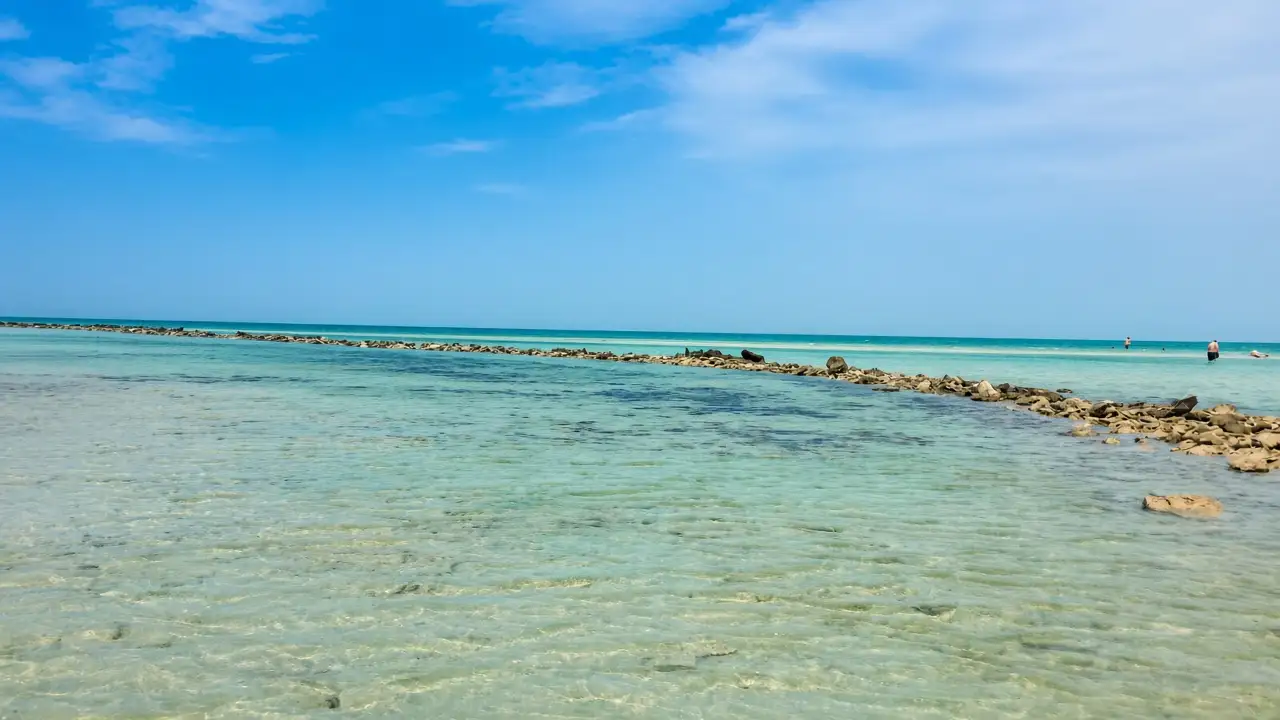
This is not a city beach. Fuwairit is a wild stretch of white sand and turquoise shallows on Qatar's northern coast, an hour and a half from Doha, with almost nothing built on it. You bring what you need, and the reward is space, silence and one of the country's few genuinely untouched shores.
It is best known for its sea turtles. Fuwairit is a protected nesting site for endangered hawksbill turtles, which is why parts of it close every summer. The rest of the year it draws campers, kitesurfers and anyone after a beach the city cannot offer.
One thing to know upfront: parts of the beach are closed from April to July for nesting, so check before you travel. Here is what to do, when to go, and what to bring.
Why Fuwairit Beach Is Worth the Drive
You will spend an hour or more each way getting here, so it has to earn the trip. It does, precisely because it is everything the city beaches are not.
The appeal is the wildness. Where a beach like Katara Beach is polished, paid and packed with facilities, Fuwairit is raw and undeveloped, soft white sand meeting clear, shallow, warm water, with rock formations, the odd palm and a wide open shoreline. It is one of the most photogenic and peaceful spots in Qatar.
It is also a rare piece of living nature. As a key nesting ground for endangered hawksbill turtles, this is a place with real ecological weight, where thousands of hatchlings make their way to the sea each season. Visiting responsibly, you are on a genuinely wild coast, not a manicured one.
And it rewards effort with experiences the city cannot match. Camp overnight under the stars, catch a sunrise straight out of the sea on the east coast, or ride the wind on a kitesurf. For that, the drive north is well worth it.
Known for: A wild, white-sand beach and a protected hawksbill turtle nesting site
Setting: The northeast coast near Al Ghariya, around 90 kilometres north of Doha
Character: Natural and largely undeveloped, with minimal facilities on site
Turtle season: Parts of the beach close from April to July to protect nesting turtles
Best for: Camping, kitesurfing, snorkelling, sunrise and a proper escape from the city
Best time: The cooler months from October to April, outside the turtle closure
The Turtles and the Nesting Season
Fuwairit's turtles are the reason to plan your visit carefully, so it is worth understanding before you go.
The beach is one of Qatar's most important nesting sites for endangered hawksbill sea turtles, which come ashore to lay their eggs roughly between April and July. To protect them, the Qatar Sea Turtle Conservation programme monitors and fences off nesting areas, and parts of the beach, sometimes the whole beach, are closed to visitors through those months. As many as several thousand hatchlings make it to the sea each season.
If you visit outside the closure, you are simply enjoying a beautiful beach. If your trip falls between April and July, check the current access rules before setting out, since restrictions change year to year and turning up to a closed beach after a long drive is a real risk.
Whenever you come, the rule is the same: never disturb the turtles, their nests or the fenced zones, keep to marked areas, and take all your litter home. This is a conservation site first and a beach second.
Things to Do at Fuwairit Beach
There is more to Fuwairit than lying on the sand, though that is lovely too. Match the activity to the season and the wind.
Swimming and Snorkelling
The water here is calm, clear and shallow, which makes it safe and easy for swimming, and good for families with children. Snorkellers can explore the marine life just offshore, so bring your own gear, since there is little to rent on this quiet stretch.
Kitesurfing
Fuwairit is one of Qatar's recognised kitesurfing spots thanks to reliable winds, and it has become a hub for the sport. If you kite, this is a prime northern location, and even if you do not, watching the kites skim the bay is part of the scene.
Camping Overnight
Camping is the classic Fuwairit experience. Overnight camping is popular and permitted in designated areas, so bring a tent, water, food and firewood for a barbecue, settle in for the night, and wake for the sunrise. There are no facilities, so you must be fully self-sufficient.
Sunrise and Photography
Because Fuwairit sits on the east coast, the sun rises straight out of the sea, which is spectacular and a big reason campers stay over. The white sand, turquoise water and rock formations make the whole beach a photographer's favourite in the soft early light.
Beach Walks and Rock Pools
Stroll the wide shoreline looking for shells, unusual rocks and the occasional palm, and explore the rock formations at the edges of the bay. It is a simple, restorative way to spend a few hours away from everything.
What to Bring
Because Fuwairit is undeveloped, coming prepared is the difference between a great day and a difficult one.
Facilities are minimal to non-existent, so treat it as a self-sufficient trip. Bring plenty of drinking water, food and snacks, and a portable grill if you plan to cook. There is little natural shade, so pack a beach umbrella or sunshade, along with sunscreen, hats and everything you need for the sun.
If you are camping, add a tent, bedding, firewood and lighting, and plan your waste, since you carry out everything you bring in. A normal car reaches the beach area, but avoid driving on soft sand, especially in strong winds, unless you are equipped for it.
Visitor Essentials
Admission: Free. Fuwairit is a public, natural beach.
Turtle closure: Parts of the beach, sometimes all of it, close from April to July for turtle nesting. Check current access before travelling.
Facilities: Minimal to none. Bring your own water, food, shade and supplies.
Camping: Overnight camping is popular and permitted in designated areas. Come fully self-sufficient.
Best time: October to April for cooler, calmer conditions, and early morning for sunrise and quiet.
Parking: Available but limited, near the beach.
Getting around: A car is essential. There is no public transport to the beach.
Respect the site: Do not disturb turtles, nests or wildlife, keep to marked areas, and take all litter home.
Getting Here
Car: Essential, and the only practical way. The drive from Doha takes roughly an hour to an hour and a half, heading north on Al Shamal Road to the Fuwairit exit, then following signs toward Fuwairit village and the beach.
Distance: Around 90 kilometres north of Doha on the northeast coast, near Al Ghariya.
Hire or taxi: With no public transport to the beach, hiring a car is the usual choice. Our getting around Doha guide covers car hire and transport options.
On the sand: A normal car is fine for the beach area, but avoid driving onto soft sand, particularly in windy conditions.
Make a Day of It
Fuwairit rewards either a long day trip or an overnight camp, so plan around the light and the drive.
For a day trip, set out early to beat the heat and the traffic, arrive for a morning swim and snorkel while it is quiet, and spend the day between the water, the sand and the rock pools. Bring everything you need, since there is nowhere to stock up nearby.
For the full experience, camp overnight. Pitch up in the afternoon, cook on a grill as the sun goes down, and wake for the sunrise over the sea, which is the moment Fuwairit is made for. Either way, pair it with the other sights of the north, since you have come this far already.
Stay Nearby
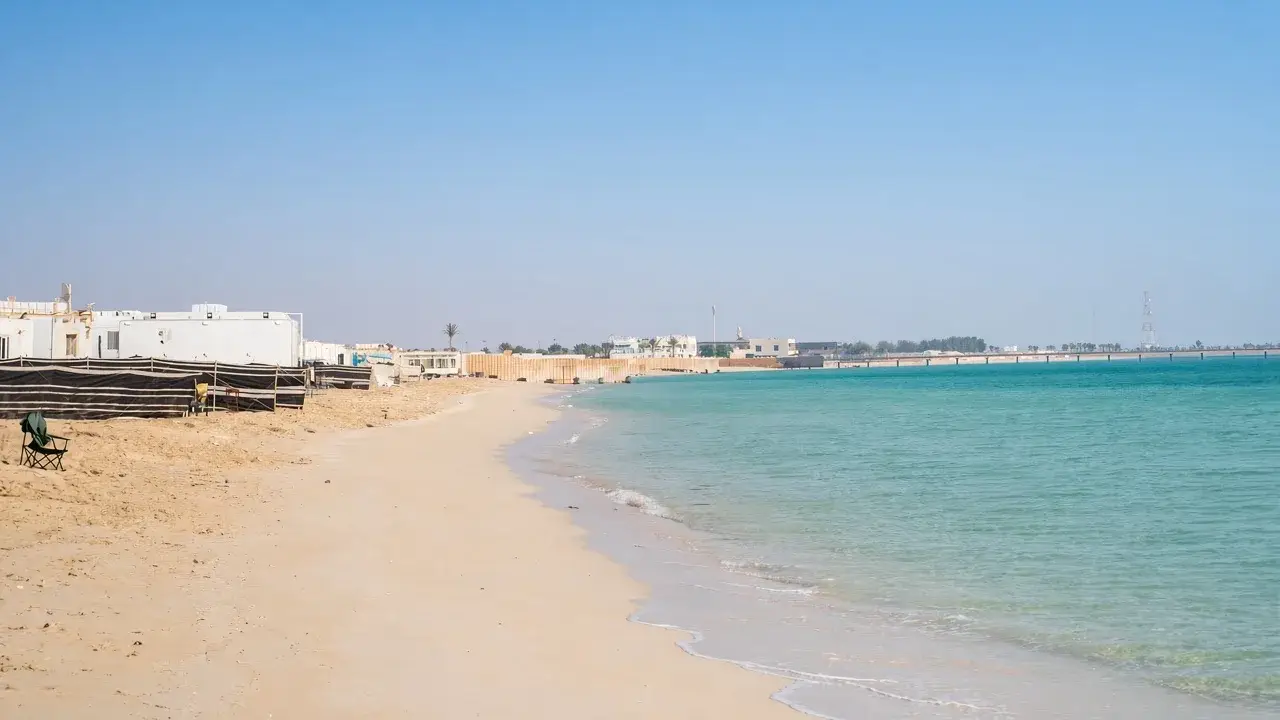
Fuwairit used to be strictly a day-trip or camping beach, but that has changed. The Fuwairit Kite Beach resort, part of Hilton's Tapestry Collection, now sits beside the beach, designed with kitesurfers in mind but open to all, which lets you enjoy the coast without pitching a tent.
Otherwise, camping on the beach is the traditional way to stay, or you can visit as a day trip from the city. If you would rather base yourself in Doha and drive up, our guide to accommodation in Doha covers the best areas to stay.
Nearby Places to Visit
Al Ghariyah Beach: A quiet neighbouring beach with its own rock formations, close by on the north coast.
Maroona Beach: A natural beach near Fuwairit, warm, shallow and good for families.
Ras Rakan Island: A remote island off the northern tip, a destination for adventurous day trips.
Al Zubarah Fort: A UNESCO World Heritage Site to the northwest, rich in Qatari history.
Al Shamal: The northern town area, the last place to pick up supplies before the beach.
Al Ruwais: A small northern port town on the way, worth a brief stop.
Frequently Asked Questions
Explore Tours
No tours found right now.