
Katara Masjid (Blue Mosque)
Discover the Qatar Katara Masjid (Blue Mosque)
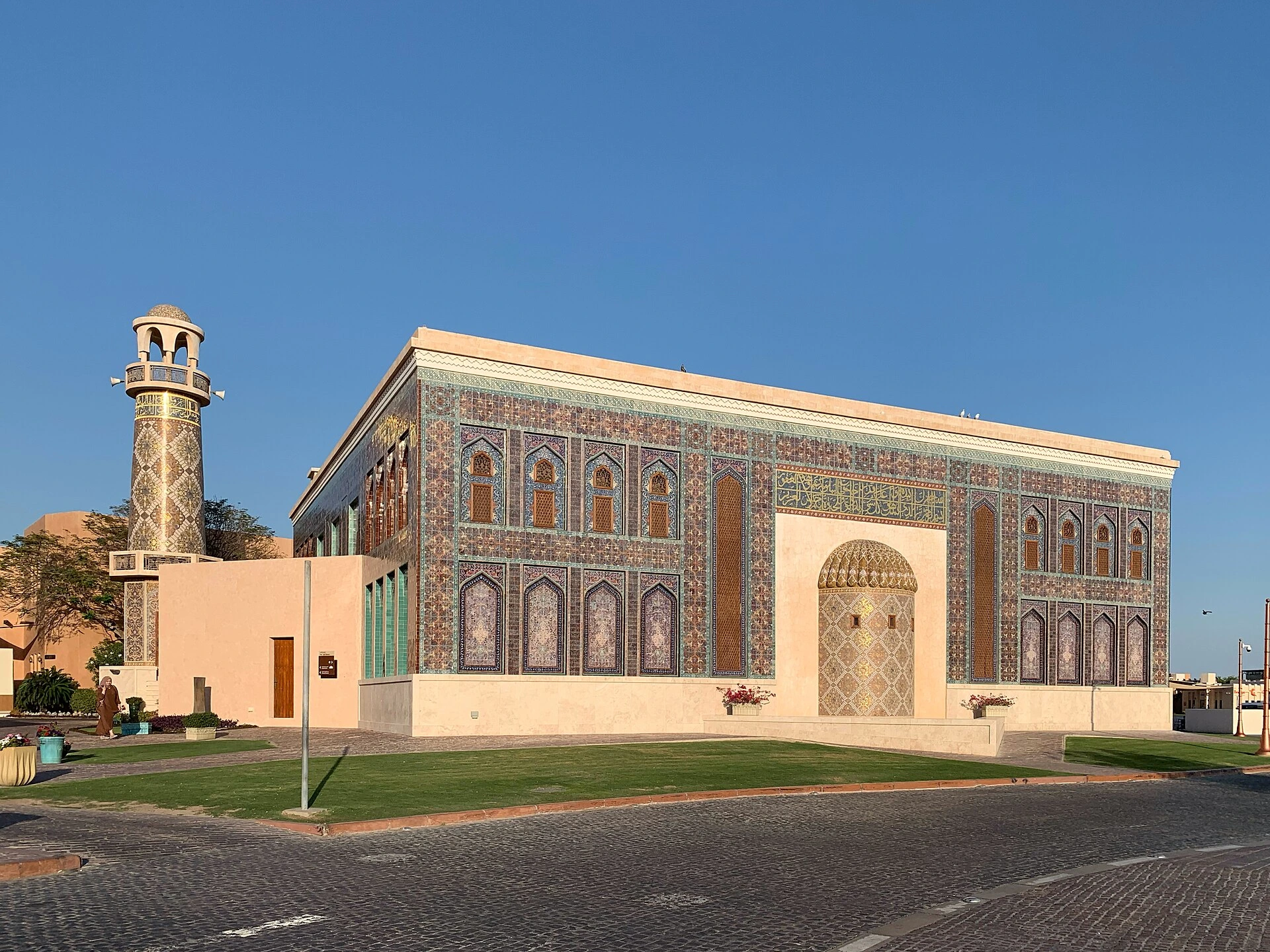
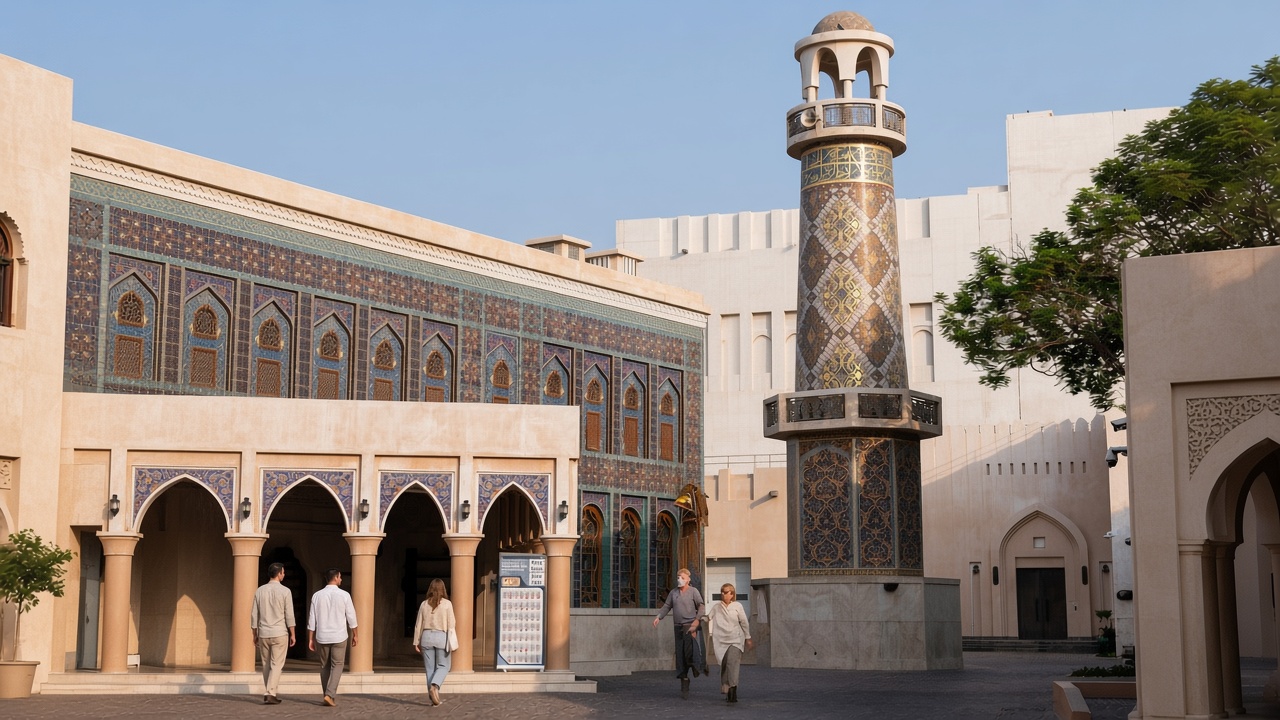
Some mosques impress you with scale. This one stops you with colour. Every surface of the Katara Mosque is sheathed in mosaic, turquoise and violet tiles catching the light, gold calligraphy threaded through the pattern, a freestanding minaret rising over it all.
Officially the Katara Mosque and widely known as the Blue Mosque of Doha, it sits at the heart of Katara Cultural Village on the city's northern waterfront. It opened with the village in 2010 and has become one of the most photographed buildings in Qatar, for good reason.
The design is the work of the celebrated Turkish architect Zeynep Fadıllıoğlu, the first woman to design a mosque in modern Turkey. For Katara she drew on Ottoman, Persian, Syrian and Central Asian traditions, then wrapped the whole building in hand painted ceramic and glass mosaic made specifically for this site.
Unlike its neighbour the Golden Mosque, the Katara Mosque welcomes non Muslim visitors inside outside prayer times, so you can see the artistry up close. Entry is free, it takes little time, and it pairs naturally with a wider afternoon at Katara.
Come for the tiles. Stay for the calm.
Why the Blue Mosque Is Worth Seeing
Most of Qatar's landmark mosques are defined by size or setting. The Katara Mosque is defined by craft, and it is the detail that makes it special.
The entire exterior is a single continuous artwork. Turquoise and purple glass mosaic and hand painted ceramic tiles cover the walls, minaret and domes, worked into geometric patterns, vegetal Islamic motifs and panels of Arabic calligraphy. The gold in those inscriptions is real, made from 24 karat gold leaf set into the mosaic, and the tile project was executed by restoration specialists trained on Istanbul's Dolmabahçe Palace.
It is also a landmark of modern mosque design. Its architect, Zeynep Fadıllıoğlu, made history with Istanbul's Şakirin Mosque before taking on Katara, and this building extended her signature approach, traditional decorative richness married to contemporary construction, on a far more public stage.
For a visitor, the appeal is simple and unusual. This is a working mosque that opens its doors to people of all faiths, sits inside a lively cultural village with plenty else to do, and rewards you whether you come for the architecture, the photography or a quiet moment inside.
Known for: Its dazzling turquoise, purple and gold mosaic exterior, hence the nickname the Blue Mosque
Also called: Katara Masjid, the Great Katara Mosque and the Blue Mosque of Doha
Architect: Zeynep Fadıllıoğlu, the first woman to design a mosque in modern Turkey
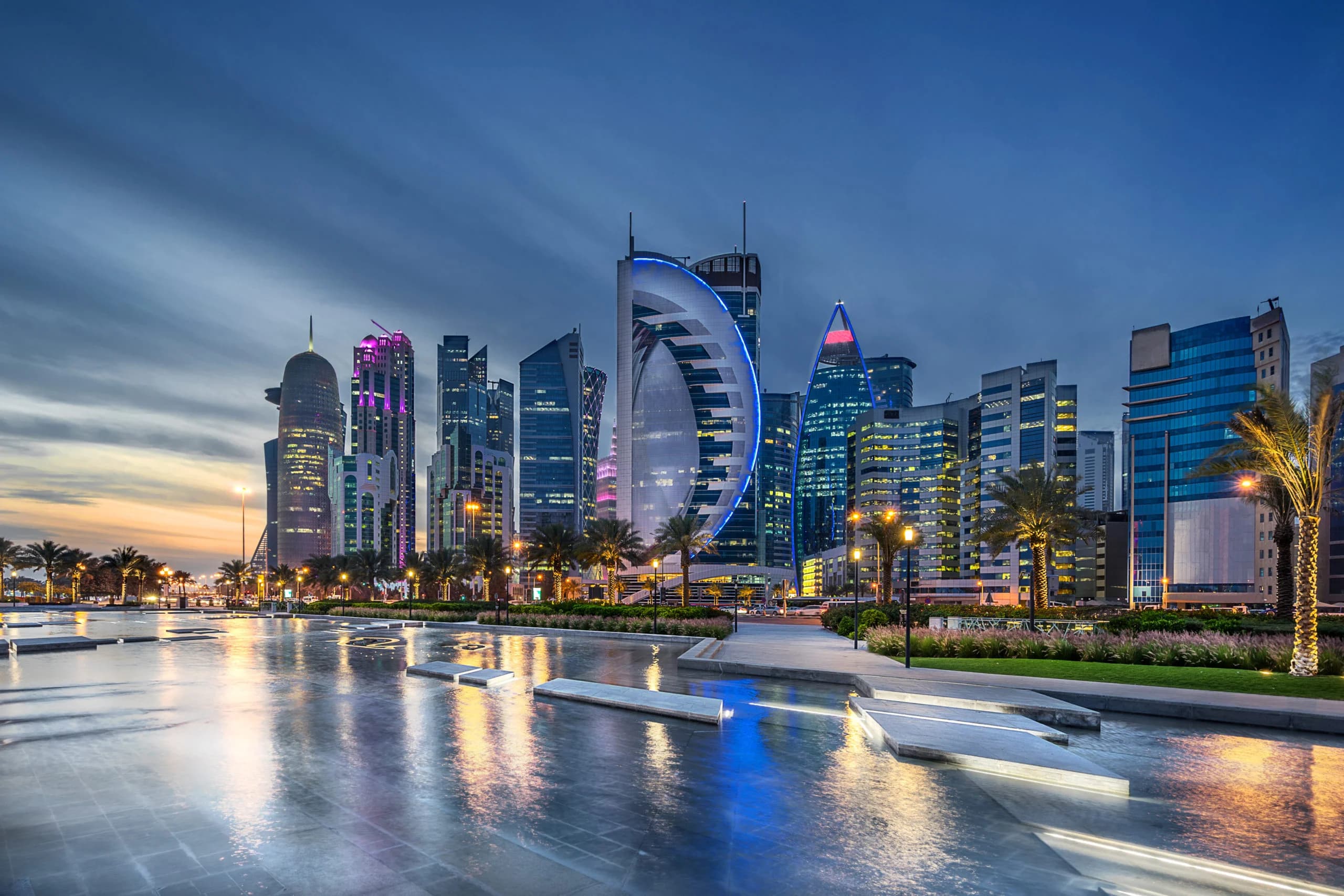
Setting: Katara Cultural Village, on Doha's northern waterfront near West Bay and The Pearl
Opened: 2010, alongside Katara Cultural Village
Status: A working mosque, free to enter, and open to non Muslim visitors outside prayer times
A Mosque Wrapped in Mosaic
The building rewards a slow circuit on foot, since the closer you look, the more the surface gives up.
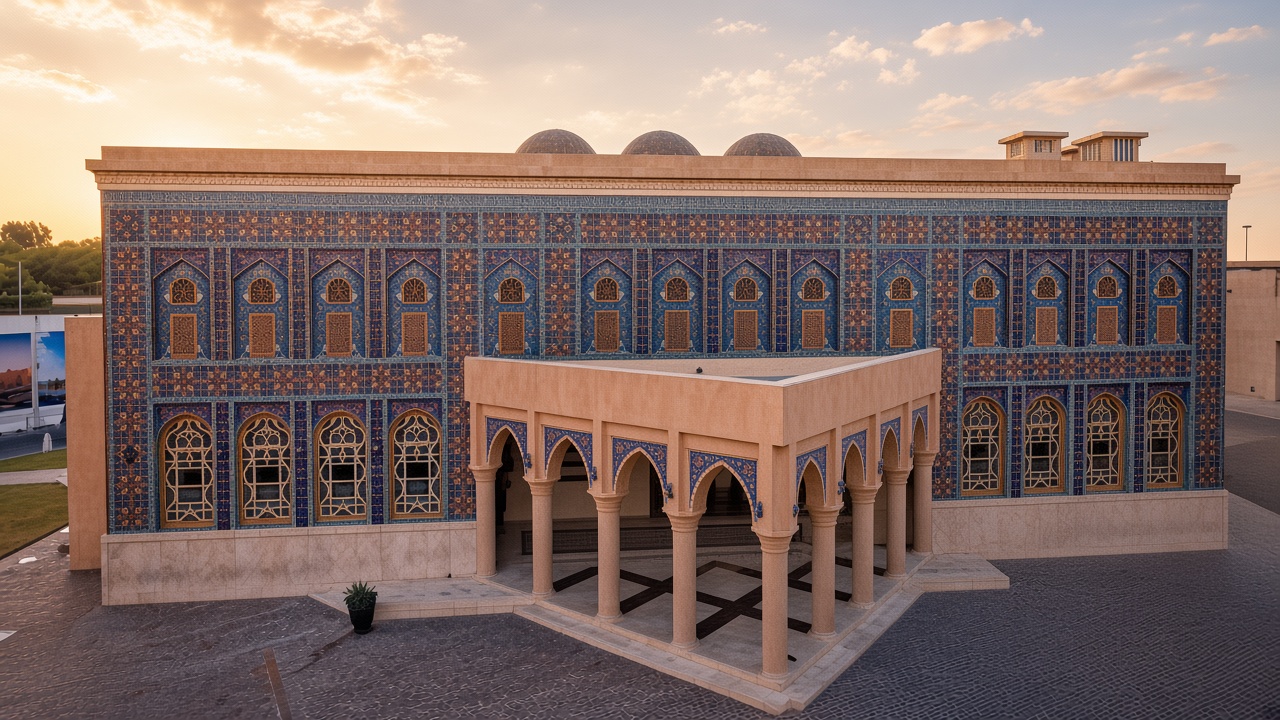
From a short distance the mosque reads as a shimmering block of blue and purple, its freestanding minaret and cluster of domes forming a striking silhouette that turns almost jewel like when floodlit after dark. Step nearer and the single expanse of colour resolves into thousands of individual tiles, some glass mosaic, some hand painted ceramic, each laid to build the pattern across the facade.
Fadıllıoğlu drew deliberately on several traditions at once rather than copying one. There are Ottoman, Persian, Syrian and Central Asian echoes in the forms, unified by the intense blue palette and the golden calligraphic panels that run through it. The nine domes and the star like geometry overhead are part of that composition, as is the elaborate mihrab that marks the direction of prayer inside.
The interior is quieter and more restrained than the exterior, a serene prayer hall of geometric pattern and soft light designed to balance the ornate skin of the building. After the visual intensity outside, that calm is the point.
Inside and Around the Mosque
There is no fixed route, and guides are usually on hand to help. These are the things worth noticing.
The Mosaic Exterior
The main event, and the reason most people come. Walk the full perimeter to take in how the turquoise and violet tiles, the gold calligraphy and the geometric panels shift as the light changes through the day. Early morning and the hour before sunset are the most rewarding for both the eye and the camera.
The Freestanding Minaret and Domes
Unlike many mosques where the minaret rises from the main structure, Katara's stands separately, clad in the same blue, white and gold mosaic. Above the prayer hall, the domes and their star like arrangement complete the silhouette that defines the building from across the village.
The Prayer Hall
A calm, carpeted interior finished with geometric patterning and a finely worked mihrab. Non Muslim visitors are generally welcome to step inside outside prayer times to appreciate the atmosphere, provided they dress and behave respectfully.
The Educational Displays
The mosque provides information about Islam and its own design in several languages, including interactive screens, and welcoming guides who are happy to answer questions. It is set up as a place of cultural exchange as much as worship.
The Golden Mosque Next Door
A short walk away in the same village stands Katara's second mosque, the Golden Mosque or Masjid Al Dhahab, clad entirely in shimmering gold mosaic in an Ottoman style. Non Muslim visitors can admire its exterior, though the interior is reserved for worshippers, making the two mosques a natural blue and gold pairing.
Visiting the Blue Mosque Respectfully
The Katara Mosque is welcoming, but it remains an active place of worship, so the usual courtesies matter.
Visit outside prayer times, since access for visitors pauses during the five daily prayers and around Friday prayers in particular. Remove your shoes before entering. Dress modestly, covering shoulders, arms and legs. Men should wear long trousers and a top that covers the shoulders, and women should cover shoulders, chest and legs. Abayas are usually provided at the mosque for women who need them, and while non Muslim women are not required to cover their hair, carrying a scarf is sensible.
Be quiet and unobtrusive inside, especially if anyone is praying. Photography of the exterior is welcomed and is one of the main reasons people come, but interior photography can be restricted, particularly during prayer, so check any signage or ask a guide before taking photos indoors.
Visitor Essentials
Opening hours: Open to visitors outside the five daily prayer times, with access paused for prayers and around Friday midday. Timings shift with the prayer schedule, so plan around them.
Admission: Free for everyone.
Time needed: Around 20 to 30 minutes for the mosque itself, longer with the Golden Mosque and the rest of Katara.
Dress: Modest dress covering shoulders, arms and legs. Abayas usually provided for women. A scarf is handy to carry.
Etiquette: Remove shoes before entering, keep quiet inside, and avoid disturbing worshippers.
Photography: Exterior photography welcomed. Interior photography may be restricted, especially during prayer, so check first.
Facilities: Ablution areas, multilingual educational displays and helpful guides. Full village facilities are a short walk away.
Good to know: The neighbouring Golden Mosque and the Katara Pigeon Towers are both a couple of minutes away and worth combining with your visit.
Getting Here
Metro: The Doha Metro Gold or Red Line to Legtaifiya, then a short taxi or shuttle, is the usual public transport approach to Katara Cultural Village.
Taxi: The simplest option. Around 20 to 25 minutes from Hamad International Airport and roughly 10 to 15 minutes from West Bay or Souq Waqif.
Car: Katara has extensive parking, though it fills quickly on weekend evenings and during festivals, so arrive earlier if you can.
On foot: Once inside Katara, the mosque, the Golden Mosque, the amphitheatre and the beach are all within easy walking distance of one another.
Make an Afternoon of It
The Blue Mosque works best as one stop in a wider afternoon and evening at Katara rather than a visit on its own.
Arrive in the late afternoon, when the heat has eased and the low sun brings out the blue and gold of the tiles. See the Katara Mosque first, then walk the couple of minutes to the Golden Mosque for the striking contrast, and take in the Pigeon Towers nearby on the way.
From there the village opens up. The Katara Amphitheatre, the galleries and exhibition halls, Katara Beach and the string of waterfront restaurants along Katara Street are all close by. Stay for dinner as the mosques light up after dark, which is when the whole village and its architecture are at their best.
If you are building a wider day, Katara sits between West Bay and The Pearl, so it pairs easily with either for a full northern Doha itinerary.
Stay Nearby
There is no accommodation at the mosque itself, but Katara sits in one of Doha's best connected areas for hotels.
West Bay is a short drive south, with the skyline, the Corniche and a wide choice of dining and hotels. The Pearl, just north, offers waterfront stays with a marina setting. Either keeps Katara, its mosques and its beach within a few minutes' reach.
Nearby Places to Visit
Golden Mosque (Masjid Al Dhahab): A couple of minutes away. Katara's second mosque, clad in gold mosaic, admired from outside.
Katara Amphitheatre: An open air venue blending Greek and Islamic design, overlooking the sea.
Katara Beach: A short walk down to the waterfront, with water sports and cafes.
Katara Pigeon Towers: Traditional towers beside the mosque, a distinctive photo stop.
The Pearl: The marina district just north, with waterfront dining and shopping.
West Bay: Doha's high rise district a short drive south, with the Corniche beyond.
Frequently Asked Questions
Explore Tours
No tours found right now.